Vegetable · Brassicaceae family
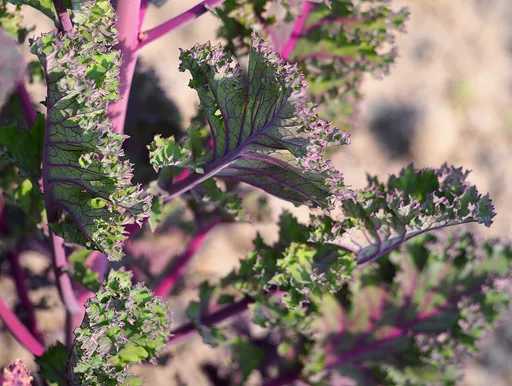
kale
Brassica oleracea var. sabellica
In short a 10-second read
Kale (vegetable) grows to 0.4–1.2 m tall and 0.3–1.2 m wide when mature. It grows best in full sun, in average to moist soil. Sow in March–June. Harvest in November–March.
× spread 0.3–1.2 m
Where to plant
Sun and soil.
It grows best in full sun, in average to moist soil.
Sun
Elsewhere it will grow less well.
Soil and water
average to moist · watering: moderate
Soil: loamy, humus-rich, clay, sandy
Soil pH 5.5–7.5
How much space it takes
Mature size.
The mature plant next to a person (175 cm).
Next to a person
The final size depends on the cultivar and the spot — we give the range from smallest to largest.
Calendar
What to do and when.
Months for Central Europe. The line shows the current month.
The year at a glance
Pruning
harvest regularly (September–February)
Sowing
sow indoors: March; direct sowing: March–June
Harvest
November–March
Winter protection
not needed
Overwintering
It copes with winter on its own.
It overwinters outdoors without protection.
- Needs no protection
- Dies back in winter and regrows in spring
Frequently asked
Quick answers.
When do I sow kale?
In March–June (sow indoors, direct sowing).
When is kale harvested?
In November–March.
Does kale tolerate shade?
No, it needs full sun.
How much space does kale need?
At maturity 0.3–1.2 m wide and 0.4–1.2 m tall; recommended spacing 45 cm.
Does kale survive winter outdoors?
Yes, without protection.
Where the data comes from
The data is indicative — we are still comparing it with further sources. Last checked 20 October 2026.
Show sources (5)
- NC State Extension Gardener Plant Toolbox
- RHS — How to grow kale
- Wikidata (CC0) — Brassica oleracea var. sabellica
- USU Extension - How to Grow Kale
- Invasive plant lists — this species is not on them: EU