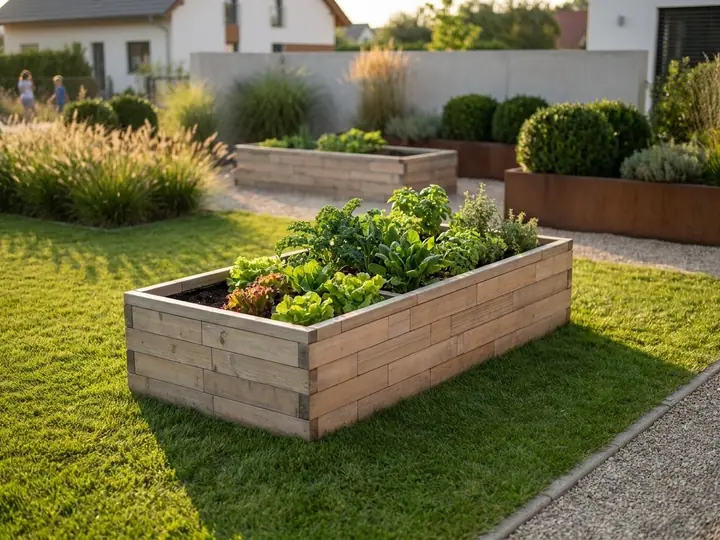
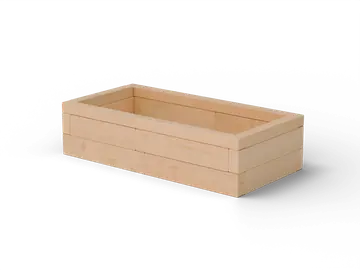
GridGarden's Brick Premium is a modular raised bed system made of solid 60 mm European larch blocks joined by wooden snap-in connector pegs. You assemble it without screws or drilling — and you design the exact shape and size you need in a free 3D configurator: rectangles, L-shapes, U-shapes or long narrow beds. In an ordinary garden, count on 15–25 years of service.
The Problem With Traditional Raised Beds
If you've ever bought a traditional raised bed, you know the frustration. You order a 120cm × 80cm bed because that's what's available. It arrives as a heavy, pre-assembled box that barely fits through your garden gate. You wrestle it into position, fill it with soil, and plant your vegetables.
Then reality hits.
The bed never quite fits the spot you had in mind. It's a little too long for the path, a little too short for the fence, and the shape is whatever the manufacturer decided to make. Thin boards start to bow under the weight of the soil, the screws rust, and the wood splits around the nails. After a few seasons, your "investment" looks like it's ready for the scrap heap.
This is why gardeners across Europe are switching to modular raised bed systems. Not as a trendy upgrade, but as a solution to real problems that fixed-size beds simply can't solve.
What Makes a Garden System "Modular"?
A modular raised bed system is built from standardized, interchangeable parts that you can combine in different configurations. Think of it like building blocks for adults — each piece works with every other piece, so you can create exactly the shape and size you need.
The key characteristics of a truly modular system are:
- Standardized components: All blocks and connectors follow the same dimensions and connection method
- Any size and shape: You design the bed to fit your space instead of choosing from a few stock sizes
- Matching additions: When you build another bed later, it uses the same blocks and looks like the ones you already have
- Exact parts list: You order precisely the pieces your design needs — no cutting, no offcuts
- No specialized tools: Assembly should be simple enough that anyone can do it
Traditional raised beds fail most of these criteria. They're designed to be sold as complete units in a handful of sizes. Modular systems are designed around your garden.
How the Brick Premium System Works
GridGarden's Brick Premium system takes the modular concept and makes it dead simple. Instead of complex corner brackets or multiple types of hardware, Brick Premium uses solid blocks of naturally durable European larch, 60 mm thick, joined with wooden connector pegs.
Here's how it works:
The Blocks: The walls are built from larch blocks 60 mm thick and 12 cm high, in lengths from 12 to 60 cm in 6 cm steps. You stack them course by course, like bricks — no nails, no screws, no metal brackets that rust. The top course is finished with lower 6 cm cap blocks, which also come in an extra-long 120 cm length.
The Connectors: Wooden connector pegs snap into pre-drilled holes and join each course to the one below. That's the whole fastening system — no hardware to buy separately and no screws or drilling to assemble it.
The Support System: In larger beds, an internal support wall braces the long sides against soil pressure, so they stay straight. The configurator adds it automatically where your design needs it.
Every block arrives pre-cut and pre-calculated for your design, together with a PDF assembly guide that shows exactly where each block goes, layer by layer. No measuring, no drilling, no sawing.
Build Any Shape, Not Just Rectangles
This is where modular systems truly shine. With traditional beds, you're limited to whatever rectangular or square shapes the manufacturer offers. With Brick Premium, you can build:
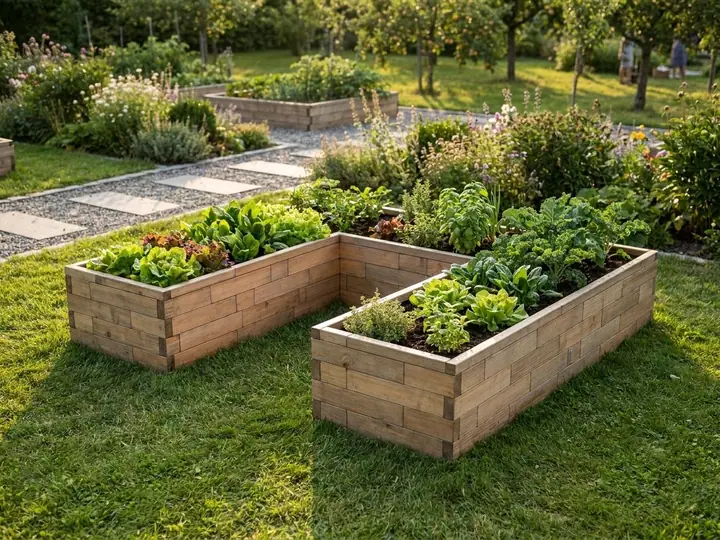
L-Shaped Beds: Perfect for corner spaces or creating distinct zones in your garden. Put tomatoes in one arm and herbs in the other. The L-shape also creates a natural workspace in the corner where you can access plants from two sides.
U-Shaped Beds: Ideal for accessible gardening. Step into the middle of the U and reach all your plants without stretching or stepping on soil. Elderly gardeners and people with mobility issues love this configuration because you can tend the entire bed while standing in one spot.
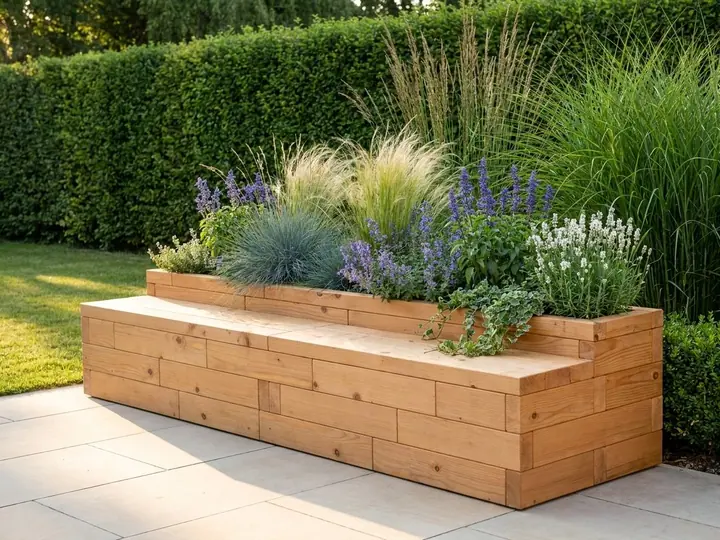
Long Narrow Beds: Running along a fence or wall? Build a bed that's long and narrow and follows the line of the fence exactly. Try finding that in a pre-made option.
Custom Rectangles: Need a bed that fits a gap of a particular length? The configurator builds the length you enter from the most economical combination of block lengths, so you are not stuck with whatever size happens to be in stock.
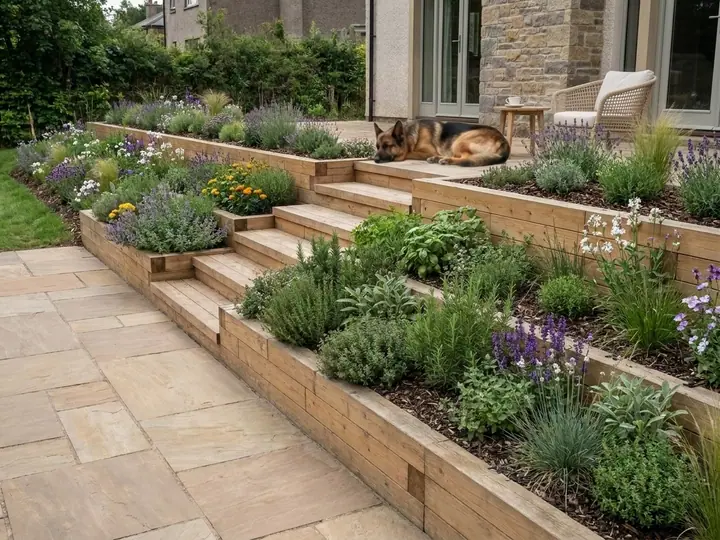
Multi-Bed Layouts: Use GridGarden's 3D configurator to design entire garden layouts with multiple beds. See exactly how they'll fit in your space before ordering a single block.
The 3D Configurator: Design Before You Buy
One of the biggest frustrations with traditional raised beds is guessing whether they'll fit your space. You measure your patio, order a bed, and discover it's too big, too small, or blocks the path to your shed.
GridGarden's 3D configurator solves this. Before spending a single euro, you can:
- Design your bed in any shape and size
- See exactly which blocks and how many connectors you need
- Get current pricing for your exact configuration
- Save your design and come back to it later
- Generate a PDF assembly guide specific to your design
The configurator uses real-time 3D rendering, so you can rotate your design and view it from different angles before you order. It's like having a garden designer in your browser.
Why 60 mm Larch?
Brick Premium is made in one thickness only: solid 60 mm European larch. Thin 18–20 mm boards from a DIY store bow under soil pressure and rot through quickly, because there is simply less wood between the soil and the weather.
Strength: 60 mm walls handle the soil pressure of tall beds without bowing — together with the internal support wall in larger beds.
Durability: Larch is naturally durable (durability class 3–4 under EN 350) and needs no chemical treatment. In an ordinary garden, count on 15–25 years; with good drainage and no standing water, 25+ years.
Thermal mass: Thick walls buffer temperature swings better than thin boards, helping to protect plant roots from frost in winter and overheating in summer.
Expandability: Start Small, Add Beds Over Time
One of the smartest features of modular systems is that you don't need to plan your final garden layout on day one. You can start small and add new beds as your skills, budget, or ambitions grow. Each bed is a build of its own, designed for its spot — and every new one matches the ones you already have.
For example, you can start with a single 120 × 80 cm bed and grow your garden step by step:
Year 1: One 120 × 80 cm bed to find out whether raised bed gardening suits you.
Year 2: Add a second, identical bed next to the first — together they give you a 240 × 80 cm growing area.
Year 3: Build a new L-shaped bed designed to fit a corner of your patio exactly.
Year 4: Add a fourth bed for herbs, for example in a U shape that is easy to tend from a chair or a wheelchair. It is made from the same blocks, so it matches the beds you already have.
Try doing that with traditional fixed beds. You'd have bought four different beds from whatever was in stock each year, and your garden would look like a mismatched collection of boxes.
Real Use Cases: From Balconies to School Gardens
Urban Balcony Garden: A small bed sized exactly to your balcony gives you room for tomatoes, peppers, and herbs. Solid larch is heavy, so check how much load your balcony can carry before you fill the bed with soil.
Suburban Vegetable Garden: Three 240cm × 120cm beds arranged in parallel rows with 60cm walkways between them. This gives you 8.6 square meters of growing space — plenty of room for salads, tomatoes, zucchini, and beans throughout summer.
L-Shaped Herb Garden: A 180cm × 60cm section along your patio edge, then a 120cm × 60cm section perpendicular to it. Put Mediterranean herbs (rosemary, thyme, oregano) in one arm where drainage is better, and moisture-loving herbs (basil, parsley, mint) in the other. The L-shape creates a cozy corner for a garden bench.
School Garden Project: Six beds built by students in a morning workshop. No power tools means safe for kids, and the PDF guide shows every block's place, so even a class of beginners can follow it. Each class gets their own bed to tend.
Accessible Community Garden: U-shaped beds allow wheelchair users and people with limited mobility to reach the center of the bed without stretching. Choose a wall height that suits comfortable seated work or standing work without bending — walls go up in 12 cm courses.
Maintenance and Longevity
A raised bed is only as good as the wood it's made of. Brick Premium blocks are made from European larch — a dense, resinous wood that naturally resists rot and insect damage.
You don't need to treat, stain, or seal the wood. The blocks will naturally weather to a silver-gray patina. This patina doesn't indicate rot — it's simply how larch ages outdoors.
Solid 60 mm larch without chemical treatment: in an ordinary garden, count on 15–25 years; with good drainage and no standing water, 25+ years. The most important thing you can do for a long life is to let water drain away freely from under the bed.
The connectors are made of wood as well. No rusty screws, no metal brackets to corrode.
The Environmental Case for Modular
Cheap raised beds create unnecessary waste. When thin boards fail after a few seasons, the entire unit goes to landfill or requires disposal. Treated wood can't be burned or composted safely. Metal brackets and screws contaminate wood recycling.
Modular systems like Brick Premium are different:
- Longer lifespan: 15–25 years in an ordinary garden means fewer resources used over time
- No metal hardware: Wooden blocks and wooden connectors mean easier recycling or composting at end of life
- Untreated wood: Larch is naturally durable — no chemical treatments needed
- No offcuts: Blocks come pre-cut for your design, so there is no waste from cutting boards to size
- European wood: GridGarden uses European larch, which travels a far shorter distance than imported timber
When the wood eventually reaches the end of its life, it can become mulch, be composted, or burned cleanly in wood stoves. Try that with pressure-treated pine or beds with metal components.
Why Modular Systems Are the Future
The shift from fixed products to modular systems is happening across every industry. Cars have modular platforms. Electronics have standardized ports. Furniture companies like IKEA built empires on modular design. Gardening is simply catching up.
The advantages are too significant to ignore:
- Buy exactly what you need, not what manufacturers decided to make
- Design every bed to fit its spot
- Add new beds that match the ones you already have
- Skip the sawing, drilling, and screwing
- Reduce waste and environmental impact
Traditional fixed raised beds made sense when the choice was between a few standard boxes or building your own from lumber. Today's gardeners want beds that fit their space exactly, look good together, and last for many years. They want systems that adapt to their garden, not products that force the garden to adapt to them.
Getting Started With Brick Premium
If you're ready to try modular raised bed gardening, start with the 3D configurator. Design your ideal bed (or beds), see the cost, and get a shopping list of exactly what you need.
New to raised bed gardening? Start with a single bed of about 120 × 60 cm. That gives you roughly 0.7 square meters of growing space — enough for a few tomato plants or a mixed salad garden. Most beds go together in under an hour. If you love it, add another bed next season.
Already have traditional beds that are starting to fail? Don't replace them with more fixed boxes. Switch to Brick Premium and build a garden that will serve you for many years.
The future of home gardening isn't bigger beds or fancier materials. It's smarter systems that give you control, flexibility, and the freedom to garden your way.
Key Takeaways
- True screw-free assembly — Brick Premium blocks are joined with wooden snap-in connector pegs, without carpentry skills or power tools
- Larch durability — solid 60 mm European larch without chemical treatment: 15–25 years in an ordinary garden, 25+ years with good drainage and no standing water
- Design freedom — rectangles, L-shapes, U-shapes, long narrow beds or whole layouts, designed to fit your space in the 3D configurator
- Exact parts list — the configurator picks the most economical combination of blocks for your design and shows the current price before you order
- Grow step by step — start with one bed and add new ones in later seasons; each new bed is made from the same blocks and matches the ones you already have
- Straight walls — 60 mm walls and an internal support wall in larger beds keep the sides from bowing under soil pressure
- No chemical treatment needed — larch is naturally durable and safe for organic vegetables without toxic preservatives
- No cutting, no offcuts — every block arrives pre-cut for your design, with a PDF guide showing where it goes