Optimizing raised bed dimensions is key for both high yields and comfortable gardening. Aim for widths of 3-4 feet for two-sided access or 1.5-2 feet for one-sided, and heights from 8-12 inches for easy reach or 2-3 feet for comfortable standing/sitting. Choosing durable 60mm larch planks ensures longevity and stability for your ergonomic garden.
Designing a raised garden bed is more than just picking a spot in your garden; it’s about creating an efficient, productive, and comfortable growing space tailored to your needs. The dimensions you choose for your raised bed — its width, height, and length — directly impact how much you can grow, how easily you can tend to your plants, and even the long-term health of your back and knees. Whether you're a seasoned gardener or just starting, understanding optimal raised bed dimensions can transform your gardening experience.
In Central Europe's diverse climate zones, strategic planning is particularly beneficial. This guide will walk you through the essential considerations for raised bed dimensions, focusing on maximizing yield and ensuring easy accessibility for every gardener, including those with mobility considerations. For a broader overview of raised bed gardening, explore our Complete Guide to Raised Garden Beds in Europe.
What are the ideal width dimensions for a raised garden bed?
The ideal width for a raised garden bed is primarily determined by accessibility, ensuring you can reach all parts of the growing area without needing to step into the bed. For beds accessible from both sides, a width of three to four feet is commonly recommended.
This width allows gardeners to tend to plants from either side, making planting, weeding, and harvesting much more efficient. Colorado State University Extension notes, "This width makes it easy to reach into the growing bed from walkways for planting, weeding, and harvesting." Similarly, Iowa State University Extension and Outreach advises, "Beds accessible on both sides can be 3 to 4 feet wide." The goal is to avoid compacting the soil by stepping on it, which is crucial for healthy root development and soil structure. University of New Hampshire Extension emphasizes that raised beds "should not be made too wide" to ensure easy access to the center of the growing space.
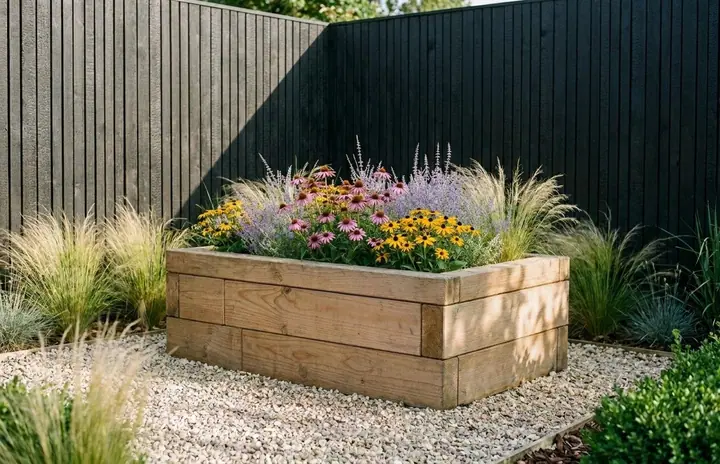
If your raised bed is situated against a wall, fence, or another structure, limiting access to only one side, the recommended width narrows. In such cases, a maximum width of 1 1/2 to 2 feet is advisable. This ensures that you can comfortably reach the back of the bed without overstretching or straining. When planning your garden layout, always consider your arm reach and preferred working posture.
How does raised bed height impact accessibility and ergonomics?
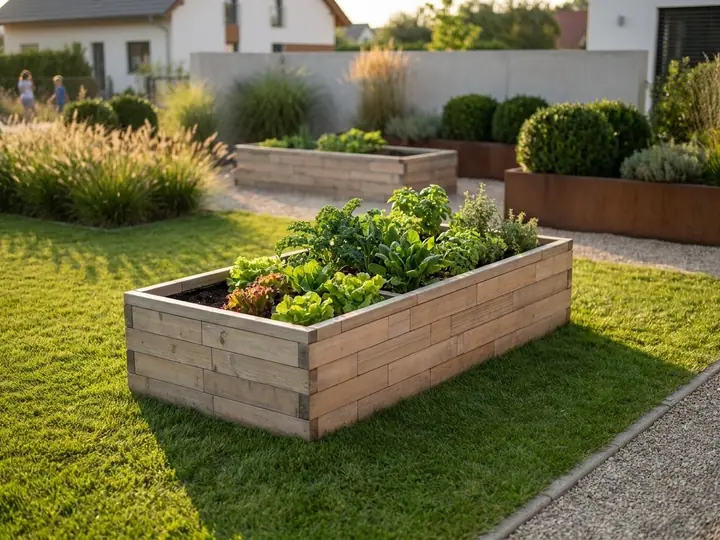
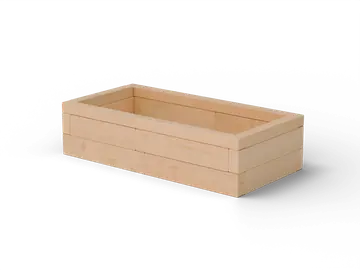
Raised bed height significantly impacts accessibility, reducing physical strain and making gardening enjoyable for people of all ages and mobility levels. Different heights cater to different needs, from minimizing bending to enabling gardening while seated.
For gardeners looking for easier access without extensive bending, beds ranging from 8 to 12 inches high are typically beneficial. This modest elevation can make a noticeable difference for those with mild back or knee issues. Taller beds, approximately 2 to 3 feet high, offer even greater ergonomic advantages. These heights are ideal for gardening while standing or sitting on a stool, virtually eliminating the need to bend over. NC State Extension highlights that "raised beds ranging from 8-12 inches high offer easier access, while taller beds of 2-3 feet are suitable for gardening while seated or standing with less bending." This is particularly advantageous for seniors or individuals with chronic pain, allowing them to enjoy gardening without discomfort. GridGarden's modular system allows you to customize your bed's height precisely to your comfort, using our robust 60mm larch planks.
Beyond personal comfort, increased height also provides a deeper soil profile, which can be beneficial for root vegetables and plants that require ample drainage. For more insights on soil, see our article on the Best Soil Mix for Raised Beds.
Can raised bed dimensions influence planting density and yield?
Yes, raised bed dimensions, particularly width, significantly influence planting density and ultimately, your garden's yield. By optimizing dimensions, you can maximize your growing space and cultivate more food in a smaller footprint.
One effective method for maximizing yield in raised beds is "square foot gardening," which focuses on intensive planting within a defined grid. Instead of planting in traditional rows, plants are spaced evenly in square-foot sections, allowing for closer planting and higher yields per area. University of New Hampshire Extension notes, "A great way to maximize your growing yields is to use the principle of “square foot gardening” in small growing spaces such as raised beds." The optimal widths discussed earlier (3-4 feet for two-sided access) perfectly complement this technique, as they allow gardeners to reach all squares of the bed for planting and maintenance without stepping inside. This intensive planting method, coupled with proper soil and nutrient management, can lead to substantially higher yields compared to traditional in-ground rows. For a comprehensive guide on getting started, read our How to Start a Raised Bed Garden article.
By carefully planning your bed dimensions, you create an environment where every inch of soil is productive, supporting a diverse and abundant harvest. The ability to customize dimensions with systems like GridGarden's Brick Premium means you can design beds that perfectly fit your desired planting strategies.
What length considerations are important for raised beds?
Unlike width and height, which have practical ergonomic limits, the length of a raised bed is largely flexible and can be adapted to fit your garden space and aesthetic preferences. However, there are practical considerations, especially regarding material sourcing and modularity.
For DIY builders using standard lumber, planning lengths that are multiples of 2 or 3 feet can help minimize material waste, as lumber typically comes in 8-, 10-, and 12-foot lengths. CAES Field Report advises, "To minimize waste when purchasing new lumber for raised beds, plan dimensions that are multiples of 2 or 3 feet." This approach can save money and reduce environmental impact. However, with modular raised bed systems, such as GridGarden's Brick Premium, length is virtually limitless. Our unique snap-in connector system allows you to extend your raised bed to any desired length, fitting perfectly into long, narrow spaces or expansive garden plots. This flexibility is a significant advantage, especially for gardeners who want to maximize every available corner of their garden.
Longer beds can be excellent for creating distinct growing zones for different plant families or for companion planting strategies. They also provide a continuous visual line, which can enhance the aesthetic appeal of your garden design. Remember to plan for adequate pathways between long beds to maintain accessibility.
How can you design custom raised beds for unique garden spaces?
Designing custom raised beds is essential for making the most of unique garden spaces, irregular plots, or specific landscape features. Standard rectangular beds often don't fit perfectly, leaving wasted space or awkward gaps. This is where modular systems truly shine.
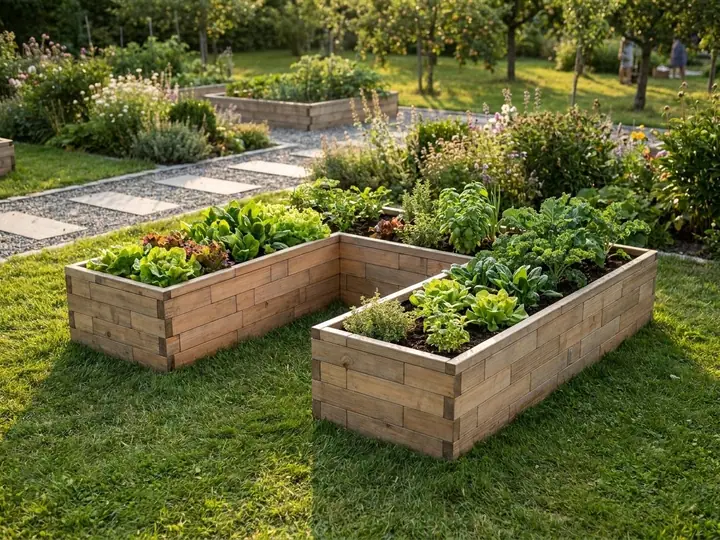
GridGarden's Brick Premium system offers unparalleled flexibility, allowing you to create not just standard rectangular beds, but also L-shape, U-shape, and truly custom configurations. Our modular planks and snap-in connectors mean you can design beds that hug fences, wrap around trees, or fit snugly into corners. This adaptability ensures that every inch of your garden can become a productive growing area. To visualize and plan your perfect bed, our free GridGarden Studio 3D configurator allows you to experiment with different shapes, sizes, and heights. You can even use our AI Garden Designer feature to see how your custom bed will look in your actual garden space, turning your ideas into a realistic plan.
This level of customization is particularly valuable in Central European gardens, which often feature diverse layouts from compact urban balconies to sprawling rural plots. Being able to tailor your raised beds means you're not constrained by off-the-shelf sizes, enabling a truly personalized and efficient garden design.
What are the material considerations for durable raised beds?
The choice of material is fundamental to the longevity and stability of your raised garden bed, especially when considering the demanding Central European climate. While various materials exist, solid, thick timber offers significant advantages in terms of durability and natural aesthetics.
Many DIY raised beds or cheaper kits use thinner boards, perhaps 18mm or 40mm thick, often made from softwood or pine. While these can be more economical initially, they typically lack the structural integrity and natural resistance to decay needed for a long-lasting raised bed. Over time, thinner planks can warp, crack, or rot, especially when exposed to constant moisture and soil pressure, necessitating frequent repairs or replacement.
In contrast, GridGarden's Brick Premium raised beds are constructed from solid 60mm thick European red larch (Larix decidua) planks. Larch is renowned for its natural durability and resistance to rot, making it an excellent choice for outdoor structures without the need for chemical treatments. As an EN 350 durability class 3-4 timber, it stands up well to the elements. With solid 60 mm larch and no chemical treatment, you can expect 15-25 years in an ordinary garden; with good drainage and no standing water, 25+ years. This substantial thickness provides superior stability against soil pressure and temperature fluctuations, ensuring your raised bed maintains its integrity for decades.
Choosing a robust material like 60mm larch means less maintenance, fewer replacements, and a beautiful, enduring garden feature. It’s an investment that pays off in durability, functionality, and peace of mind.
Comparison: Raised Bed Dimension & Material Choices
| Feature | Typical DIY / Thin-Board Kits | GridGarden Brick Premium (60mm Larch) |
|---|---|---|
| Optimal Width (2-sided access) | Often pre-set, may not be optimal (e.g., too wide, requiring stepping in). | Customizable to optimal 3-4 feet (or 1.5-2 feet for 1-sided) for comfortable reach. |
| Optimal Height (Ergonomics) | Limited height options, often low (e.g., 8-12 inches) or fixed, requiring bending. | Modular height customization from low (8-12 inches) to standing/sitting (2-3 feet). |
| Length Flexibility | Fixed lengths (e.g., 8ft, 10ft) or limited modularity; potential lumber waste. | Fully modular and expandable to any desired length, no waste. |
| Shapes Available | Primarily rectangular; limited options for L-shape, U-shape, or custom layouts. | Rectangular, L-shape, U-shape, and complex custom configurations via Bed Wizard. |
| Material Thickness | Typically thinner planks (e.g., 18mm, 40mm softwood or pine). | Solid 60mm European red larch, offering superior strength and durability. |
| Lifespan (untreated) | Shorter lifespan, typically 5-10 years, prone to warping/rot. | 15-25 years in an ordinary garden; 25+ years with ideal conditions. |
| Design Tools | Manual planning, sketches, or basic online calculators. | Free 3D configurator (GridGarden Studio) with AI visualization. |
Key Takeaways for Optimal Raised Bed Dimensions
- Width is for Reach: Design beds 3-4 feet wide for two-sided access and 1.5-2 feet for one-sided access to prevent soil compaction and straining.
- Height is for Comfort: Choose heights of 8-12 inches for easier access or 2-3 feet for standing/sitting to reduce bending and improve ergonomics, especially for seniors.
- Length is for Flexibility: Modular systems allow for virtually limitless lengths, optimizing any garden space without material waste, unlike fixed lumber dimensions.
- Material Ensures Durability: Opt for robust materials like 60mm European red larch for longevity and stability, far surpassing thinner (e.g., 18mm or 40mm) planks in durability and lifespan.
- Customization Maximizes Space: Utilize modular systems and 3D configurators to create L-shape, U-shape, or custom beds that perfectly fit unique garden layouts and maximize yield.
Sources & Further Reading
Last verified: 2026-10-15.
- Accessible Gardening: Raised Beds, Containers, and Garden Tables - Extension Gardener | NC State Extension: "Accessible Gardening: Raised Beds, Containers, and Garden Tables - Extension Gardener | NC State Extension"
- Raised Garden Bed Dimensions | CAES Field Report: "Raised Garden Bed Dimensions | CAES Field Report"
- Block Style Layout in Raised Bed Vegetable Gardens | CSU Extension: "Block Style Layout in Raised Bed Vegetable Gardens | CSU Extension"
- How to Utilize Raised Beds for Small Space Gardening | Extension: "How to Utilize Raised Beds for Small Space Gardening | Extension"
- Creating Raised Bed Planters | Yard and Garden: "Creating Raised Bed Planters | Yard and Garden"
Ready to design the perfect raised bed for your garden? Explore the possibilities with GridGarden's modular system and create a customized, ergonomic, and productive growing space. Start planning your dream garden today with our free GridGarden Studio 3D configurator.