Designing a small garden with raised beds is highly efficient for maximizing space and yield. GridGarden Studio offers a free, no-login 3D planner to effortlessly design custom layouts, including L-shape and U-shape configurations, helping you visualize and optimize every corner of your compact outdoor area.
Even the smallest garden or urban balcony holds immense potential for growing vegetables, herbs, and flowers. The key to unlocking this potential lies in smart design and efficient use of vertical and horizontal space. Raised garden beds are an excellent solution for compact areas, transforming limited ground into productive growing zones. With tools like the GridGarden Studio, planning your perfect small garden layout has never been easier or more accessible.
Why are raised beds ideal for small gardens?
Raised beds are exceptionally well-suited for small gardens because they offer unparalleled efficiency in space utilization, improved growing conditions, and ergonomic benefits. By defining clear growing areas, they allow you to cultivate more in a compact footprint compared to traditional in-ground gardens.
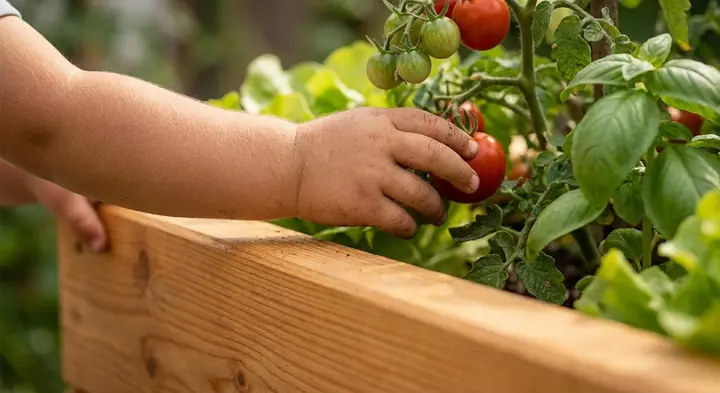
In a small garden, every square meter counts. Raised beds provide defined boundaries, preventing sprawling plants and allowing for intensive planting strategies. You can grow a greater variety of crops closer together, maximizing your harvest without needing extensive ground space. This structured approach also enhances the visual appeal of a small garden, making it look tidy and purposeful. Furthermore, raised beds offer better drainage, which is crucial for healthy root development, especially in areas with compacted or poor native soil. They also allow for better soil control, as you fill them with a custom blend optimized for your plants, rather than struggling with existing ground conditions. For those with limited mobility or simply seeking more comfortable gardening, the elevated height of raised beds reduces the need for bending and kneeling, making gardening more enjoyable and accessible.
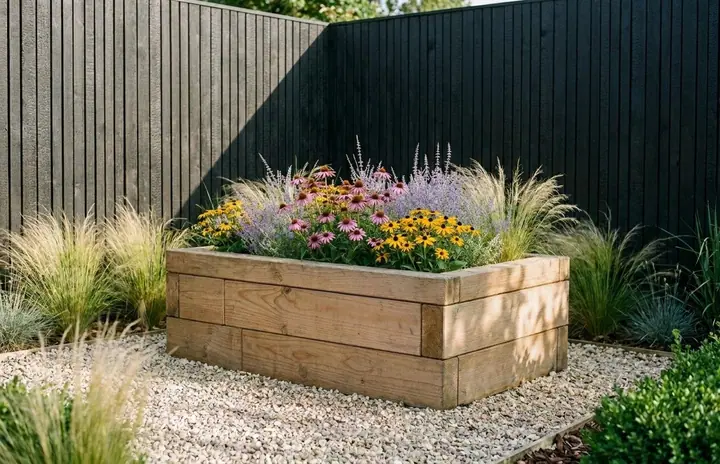
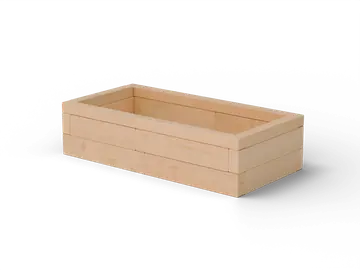
The modular nature of modern raised beds, like the Brick Premium system, means you can create configurations that perfectly fit irregular spaces, around corners, or alongside existing structures, turning otherwise unusable areas into vibrant growing patches. This flexibility is a game-changer for small, uniquely shaped gardens or patios.
How can GridGarden Studio help design a small garden?
GridGarden Studio is a free, intuitive 3D garden planner that allows you to design and visualize raised bed layouts for your small garden without needing to register or log in. It provides a powerful platform to experiment with different shapes, sizes, and arrangements, ensuring your raised beds perfectly complement your available space.
The Studio's drag-and-drop interface lets you easily place and resize modular raised beds, instantly seeing how they fit into your garden plan in both 2D and 3D views. This is particularly valuable for small gardens, where precise measurements and optimal placement are critical. You can design custom configurations, including L-shape and U-shape raised beds, which are fantastic for utilizing corners and creating continuous planting areas along fences or walls. This level of customization is often difficult to achieve with standard rectangular kits. The Studio also generates a parts list for your design, simplifying the ordering process. For an initial visual concept, the AI Garden Designer can help; the first design is free and needs no registration, while further designs require an account registered with an e-mail and are paid with credits. You can then refine these AI-generated ideas within the GridGarden Studio to create your precise plan. The Studio is also accessible to AI agents through an MCP server, enabling advanced design capabilities.
Using these tools, you can explore various layouts, ensure adequate pathways for access, and plan for sun exposure, all before laying a single plank. This saves time, prevents costly mistakes, and helps you make the most of your small garden's potential.
What are optimal raised bed layouts for maximizing space?
Optimal raised bed layouts for small gardens focus on maximizing growing area while maintaining accessibility and flow, often utilizing perimeter, corner, or multi-level designs. The best layout depends on the garden's shape, sun exposure, and your personal preferences for access and aesthetics.
Here are some popular and effective layouts for small gardens:
- Single, Long Bed: If you have a narrow side yard or a long balcony, a single, elongated raised bed can make the most of the space. Ensure it's wide enough for comfortable planting from one side (typically 60-90 cm if accessible from one side, or up to 120 cm if accessible from both).
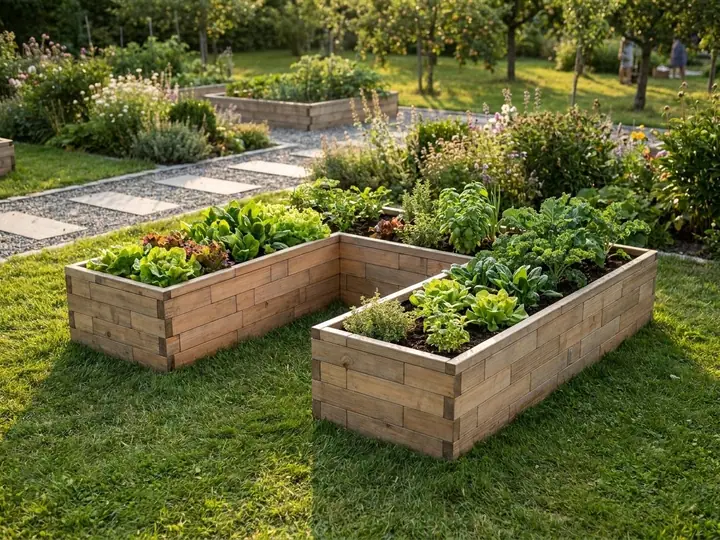
- Perimeter Layout: Placing raised beds along the edges of your garden, leaving a central open space, creates a visually appealing and highly functional layout. This works well for square or rectangular spaces, allowing you to access all beds from the central path. L-shape and U-shape beds are excellent for this, wrapping around corners to create continuous planting zones.
- Island Bed: In a slightly larger small garden, a single, centrally located raised bed (accessible from all sides) can become a focal point. This maximizes planting area by eliminating the need for pathways on multiple sides.
- Tiered or Multi-level Beds: For very small spaces or sloped areas, incorporating raised beds of varying heights can add visual interest and increase planting volume. This also allows for different plant needs, with taller beds potentially offering better drainage or warmer soil for certain crops. While GridGarden beds are single-level, their modularity allows you to create distinct sections at different heights if you have a terraced garden or a slope.
- L-Shape and U-Shape Configurations: These are particularly efficient for corners and creating natural divisions within a small garden. An L-shape raised bed can hug two walls, while a U-shape can create a cozy, enclosed planting area, sometimes with a bench or seating space incorporated into the open side. These shapes are easily designed with the GridGarden Studio.
- Vertical Integration: While not strictly a raised bed layout, consider adding trellises or supports for climbing plants within or behind your raised beds. This utilizes vertical space, which is invaluable in a small garden.
When planning, always ensure there is enough space for comfortable movement around the beds, typically 60-90 cm for pathways, depending on your needs. The modularity of GridGarden's 60mm thick larch planks allows for precise adjustments to fit your unique dimensions, making it simple to create these space-saving designs.
How do you choose the right size and configuration for your space?
Choosing the right size and configuration for your raised beds involves careful measurement of your garden space, considering sun exposure, desired plant types, and accessibility. The goal is to create a design that is both functional for gardening and aesthetically pleasing within your compact area.
Start by accurately measuring the dimensions of your available space. Note any existing features like walls, fences, gates, or permanent fixtures. Next, observe the sun's path throughout the day to identify areas that receive at least 6-8 hours of direct sunlight, which is ideal for most vegetables. Sketch out potential layouts, keeping in mind that you'll need pathways around your beds for access. For a small garden, pathways of 60-90 cm (roughly 2-3 feet) are generally sufficient. Consider the types of plants you want to grow; deeper beds are better for root vegetables, while shallower beds might suffice for herbs and leafy greens. The 60mm thick planks of GridGarden's Brick Premium system provide ample depth for most plant types, and their sturdy construction ensures stability for soil volume. Using the GridGarden Studio allows you to input your exact dimensions and virtually place different bed shapes and sizes. You can experiment with rectangular beds, or more complex L-shape and U-shape designs to fit corners or create flowing lines. Think about the overall flow of your garden and how the raised beds will integrate with other elements, ensuring they enhance rather than overwhelm the space. For example, raised beds can also serve as retaining walls, creating multi-level interest in sloped small gardens.
What materials and durability should you consider for small garden raised beds?
For small garden raised beds, durability, material thickness, and natural resistance to rot are key considerations, with solid 60mm larch being a premium choice for its long lifespan without chemical treatment. The material directly impacts how long your raised beds will last and how well they perform.
Many hardware-store kits or DIY projects for raised beds often use thinner boards, typically 18mm or 40mm thick, made from softwood or pine. While these options might seem more budget-friendly initially, their lifespan in outdoor conditions is often limited, especially without chemical treatment. Softwood, for example, is less naturally durable and can start to show signs of rot within a few years when in contact with moist soil. This means more frequent replacement and additional work in the long run, which can be particularly disruptive in a small, carefully planned garden. In contrast, GridGarden's Brick Premium raised beds are crafted from solid 60mm European red larch (Larix decidua). Larch is naturally rich in resins and tannins, giving it excellent resistance to moisture and decay, classifying it as EN 350 durability class 3-4 untreated. This inherent durability means no chemical treatments are necessary to achieve a long lifespan. For a small garden, investing in a robust material like larch ensures your raised beds remain stable and attractive for many years, providing a consistent and reliable growing space. You can expect solid 60 mm larch, with no chemical treatment, to last 15-25 years in an ordinary garden; with good drainage and no standing water, expect 25+ years. This long-term performance makes it a sustainable and practical choice for any gardener, especially those in Central Europe where conditions can vary. The modular snap-in connector system for Brick Premium beds also means no screws or drilling, making assembly straightforward with just a rubber mallet.
| Feature | DIY Thin-Board Kits (e.g., 18mm softwood) | GridGarden Brick Premium (60mm larch) |
|---|---|---|
| Material Thickness | Typically 18mm - 40mm | Solid 60mm |
| Wood Type | Often softwood, pine, or other common softwoods | European Red Larch (Larix decidua) |
| Durability (untreated) | Lower, prone to rot faster (often 15–25 years) | High, naturally resistant (15-25 years, 25+ in ideal conditions) |
| Assembly | Often requires screws, drilling, power tools | Snap-in system, no screws/drilling, only a rubber mallet |
| Design Flexibility | Mostly rectangular, limited custom shapes | Highly modular, L-shape, U-shape, and custom configurations via Studio |
| Expansion | Difficult or impossible to expand after initial build | Expandable and reconfigurable at any time |
Are there common mistakes to avoid when planning small raised beds?
To ensure success and longevity for your small raised beds, avoid common mistakes such as neglecting drainage, overcrowding plants, and making beds too wide for easy access. These issues can quickly lead to plant health problems and make gardening frustrating.
One of the most frequent errors is insufficient drainage. While raised beds inherently improve drainage, placing them directly on impermeable surfaces like concrete without proper gaps or drainage holes can lead to waterlogging. Always ensure there's a way for excess water to escape, either by elevating the bed slightly or by ensuring the base material allows water to pass through. Another common pitfall is overcrowding plants. In a small space, it's tempting to plant as much as possible, but this can restrict air circulation, increase disease risk, and reduce yields. Follow recommended plant spacing, even if it means planting fewer varieties. Overly wide beds are also a mistake, especially in small gardens where accessibility is key. If a bed is too wide (typically more than 120 cm if accessible from both sides, or 60-90 cm if only from one), you'll struggle to reach the center for planting, weeding, and harvesting. Always plan for comfortable reach. Neglecting pathways is another oversight; ensure you have enough space to move freely around your beds, especially when carrying tools or a watering can. Finally, don't forget to consider future expansion or changes. The modular design of GridGarden's Brick Premium beds means you can easily add sections or reconfigure your layout as your gardening needs evolve, a flexibility that traditional fixed structures lack. By avoiding these common errors, you can create a highly productive and enjoyable small raised bed garden.
For more inspiration and practical advice on establishing your raised bed garden, explore our guide on how to start a raised bed garden, or dive into the complete guide to raised garden beds in Europe.
Key Takeaways
- Raised beds are ideal for small gardens due to their space efficiency, superior drainage, and ergonomic benefits.
- The free GridGarden Studio allows you to design custom raised bed layouts, including L-shape and U-shape configurations, with a 3D visualizer and no registration required.
- Optimal layouts for small spaces often involve perimeter arrangements, island beds, or utilizing corners with L-shape and U-shape designs, always ensuring good accessibility.
- Choose durable materials like 60mm European red larch for longevity (25+ years in ideal conditions) and avoid thinner, less robust alternatives.
- Avoid common planning mistakes such as poor drainage, overcrowding plants, and creating beds that are too wide to reach.