Herb · Amaryllidaceae family

Wild garlic

Allium ursinum

Full sun to part shade 0.1–0.5 m × 0.5–1 m Flowers April–June Harvest April–May to −20 °C
Flower colours Click a colour

In short a 10-second read

SunFull sun to part shade
Size0.1–0.5 m
spacing 30 cm
FlowersApril–June
PlantingMarch–May, September–November
WinterNo winter protection

Where to plant and how much to water

Sun, soil and water.

It grows best in full sun to part shade, in average to moist soil.

Sun

Sun6 hours or more
Part shade3–6 hours
Shadeunder 3 h

Soil

tolerates any pH
acidicneutralalkaline
average to moistsandyloamyclay

Watering

keep the soil evenly moistless when it rains

Frost

−20 °C
no winter protectiondies back in winter, regrows in spring

How much space it takes

Mature size.

The mature plant next to a person (175 cm).

50 cm1 m1.5 m0.1–0.5 mspread 0.5–1 m
0.1–0.5 m× spread 0.5–1 m

Plant 30 cm apart.

How to plant: in clumps, clumps 15 cm apart

Reaches maturity in about 2–5 years. The final size depends on the cultivar and the spot — we give the range from smallest to largest.

Calendar

Through the year.

Months for Central Europe. The line shows the current month.

The year at a glance

Flowers: JanuaryFlowers: FebruaryFlowers: MarchFlowers: AprilFlowers: MayFlowers: JuneFlowers: JulyFlowers: AugustFlowers: SeptemberFlowers: OctoberFlowers: NovemberFlowers: DecemberPlanting: JanuaryPlanting: FebruaryPlanting: MarchPlanting: AprilPlanting: MayPlanting: JunePlanting: JulyPlanting: AugustPlanting: SeptemberPlanting: OctoberPlanting: NovemberPlanting: DecemberHarvest: JanuaryHarvest: FebruaryHarvest: MarchHarvest: AprilHarvest: MayHarvest: JuneHarvest: JulyHarvest: AugustHarvest: SeptemberHarvest: OctoberHarvest: NovemberHarvest: DecemberJanFebMarAprMayJunJulAugSepOctNovDec
FlowersPlantingHarvest
Now, in October: a good time for planting (container plant).
JanFebMarAprMayJunJulAugSepOctNovDec

Flowers

JanFebMarAprMayJunJulAugSepOctNovDec

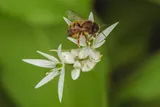
April–June · white

Planting

JanFebMarAprMayJunJulAugSepOctNovDec

container plant: March–May, September–November

Harvest

JanFebMarAprMayJunJulAugSepOctNovDec

April–May

What to plant now (October) full list in October (244) →

Pests and diseases

Common problems and what to do.

The most common problems in Central Europe. Protection is listed from the gentlest option.

High riskMedium riskLow riskRisk for this plant according to the source · no label = no documented level

Onion white rot

Stromatinia cepivora
High riskdisease
More about this problem

What you will see

Yellowing and wilting leaves, rotting roots and onion base.

The source says: it is a serious disease of the onion family.

When to look

Midsummer to early autumn

How to protect

  1. Prevention
    • You can practically never clean soil once it has white rot: prevent it being introduced (soil on tools and footwear).
    • Do not grow alliums on affected soil.
  2. By hand as soon as it appearsDig up affected plants together with the surrounding soil and dispose of them; no chemical soil treatment is available to gardeners.
Onion white rotdisease · midsummer to early autumnHigh risk

What you will see

Yellowing and wilting leaves, rotting roots and onion base.

The source says: it is a serious disease of the onion family.

When to look

Midsummer to early autumn

How to protect

  1. Prevention
    • You can practically never clean soil once it has white rot: prevent it being introduced (soil on tools and footwear).
    • Do not grow alliums on affected soil.
  2. By hand as soon as it appearsDig up affected plants together with the surrounding soil and dispose of them; no chemical soil treatment is available to gardeners.
More about this problem

What you will see

Discoloured areas on the top of leaves, with a white, grey or purple coating beneath.

When to look

Mainly summer and autumn, especially in damp conditions

How to protect

  1. Prevention
    • Do not plant densely; weed so air can circulate.
    • Water in the morning and avoid wetting the leaves in the evening.
    • Rotate crops; soil spores survive.
  2. By hand as soon as it appearsPull off affected leaves and dispose of them (burying, burning, recycling centre).
Downy mildewsdisease · mainly summer and autumn, especially in damp conditions

What you will see

Discoloured areas on the top of leaves, with a white, grey or purple coating beneath.

When to look

Mainly summer and autumn, especially in damp conditions

How to protect

  1. Prevention
    • Do not plant densely; weed so air can circulate.
    • Water in the morning and avoid wetting the leaves in the evening.
    • Rotate crops; soil spores survive.
  2. By hand as soon as it appearsPull off affected leaves and dispose of them (burying, burning, recycling centre).
More about this problem
Sources (3)

Frequently asked

Quick answers.

When does wild garlic flower?

In April–June; the flowers are white.

When is wild garlic harvested?

In April–May.

Does wild garlic tolerate shade?

It tolerates part shade (3–6 hours of sun), but not full shade.

How much space does wild garlic need?

At maturity 0.5–1 m wide and 0.1–0.5 m tall; recommended spacing 30 cm.

Onion white rot — what can you do?

You can practically never clean soil once it has white rot: prevent it being introduced (soil on tools and footwear). Dig up affected plants together with the surrounding soil and dispose of them; no chemical soil treatment is available to gardeners.

Downy mildews — what can you do?

Do not plant densely; weed so air can circulate. Pull off affected leaves and dispose of them (burying, burning, recycling centre).

Sources (9) Checked 24 October 2026

Similar plants

Have a look at these too.

Design a bed with this plant in Studio