Perennial · Polemoniaceae family
fall phlox
Phlox paniculata
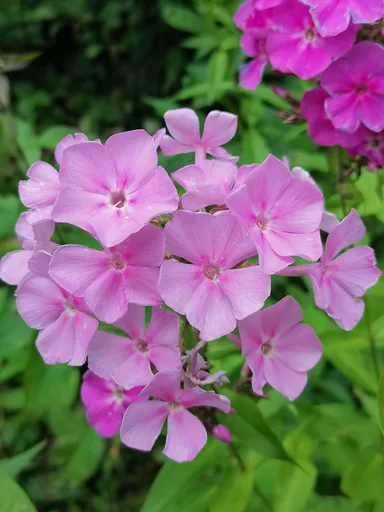
In short a 10-second read
Fall phlox (perennial) grows to 0.6–1.5 m tall and 0.6–0.9 m wide when mature. It grows best in full sun to part shade, in average to moist soil. It flowers in June–August; the flowers are pink, purple, white, red or blue. Hardy to −32 °C.
× spread 0.6–0.9 m
Where to plant
Sun, soil, frost.
It grows best in full sun to part shade, in average to moist soil. Hardy to −32 °C.
Sun
Tolerates several positions — choose to suit the rest of the garden.
Soil and water
average to moist · watering: moderate
Soil: humus-rich, loamy, clay
Soil pH 5.5–8
Frost
It copes with a normal winter outdoors.
How much space it takes
Mature size.
The mature plant next to a person (175 cm).
Next to a person
Reaches maturity in about 2–5 years. The final size depends on the cultivar and the spot — we give the range from smallest to largest.
Calendar
What to do and when.
Months for Central Europe. The line shows the current month.
The year at a glance
Flowers
June–August · pink, purple, white, red or blue
Pruning
deadhead spent flowers (as needed); cut back to the ground (October–November)
Planting
container plant: March–May, September–November
Winter protection
not needed
Overwintering
It copes with winter on its own.
It overwinters outdoors without protection, hardy to −32 °C.
- Needs no protection
- Hardy to −32 °C
- Dies back in winter and regrows in spring
What to combine it with
Same needs, different flowering.
They share the same sun and soil and flower in other months — so the bed flowers for longer.


Frequently asked
Quick answers.
When does fall phlox flower?
In June–August; the flowers are pink, purple, white, red or blue.
Does fall phlox tolerate shade?
It tolerates part shade (3–6 hours of sun), but not full shade.
How much space does fall phlox need?
At maturity 0.6–0.9 m wide and 0.6–1.5 m tall; recommended spacing 50 cm.
Does fall phlox survive winter outdoors?
Yes, without protection, hardy to −32 °C.
Where the data comes from
We compared the data in 18 expert sources. Last checked 14 October 2026.
Show sources (18)
- NC State Extension Gardener Plant Toolbox — Phlox paniculata
- Missouri Botanical Garden Plant Finder — Phlox paniculata
- GBIF Backbone Taxonomy — Phlox paniculata
- GBIF Occurrence Search API — Phlox paniculata
- Wikidata (CC0) — Phlox paniculata
- Clemson HGIC
- RHS - Phlox paniculata
- Iowa State Extension - How to Plant Perennials
- RHS - How to grow perennial plants
- Perennials.com
- Perennials.com
- Beth Chatto's Plants & Gardens
- Invasive plant lists — this species is not on them: EU, Slovakia, Czechia, Germany, Poland, Denmark
Similar plants