Perennial · Lamiaceae family
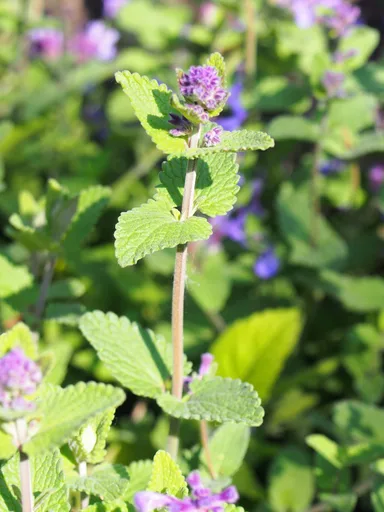
catmint
Nepeta ×faassenii
In short a 10-second read
Catmint (perennial) grows to 0.45–0.6 m tall and 0.3–0.9 m wide when mature. It grows best in full sun, in dry to average soil. It flowers in May–September; the flowers are blue, purple or white. Hardy to −26 °C.
× spread 0.3–0.9 m
Where to plant
Sun, soil, frost.
It grows best in full sun, in dry to average soil. Hardy to −26 °C.
Sun
Elsewhere it will grow less well.
Soil and water
dry to average · watering: little
Soil: sandy, loamy
Frost
It copes with a normal winter outdoors.
How much space it takes
Mature size.
The mature plant next to a person (175 cm).
Next to a person
Reaches maturity in about 2–5 years. The final size depends on the cultivar and the spot — we give the range from smallest to largest.
Calendar
What to do and when.
Months for Central Europe. The line shows the current month.
The year at a glance
Flowers
May–September · blue, purple or white
Pruning
prune after flowering (as needed)
Planting
container plant: March–May, September–November
Winter protection
not needed
Overwintering
It copes with winter on its own.
It overwinters outdoors without protection, hardy to −26 °C.
- Needs no protection
- Hardy to −26 °C
- Dies back in winter and regrows in spring
What to combine it with
Same needs, different flowering.
They share the same sun and soil and flower in other months — so the bed flowers for longer.

netted iris
0.1–0.15 m
spring crocus
0.08–0.15 m
common snowdrop
0.1–0.25 mReady-made Studio combinations that include catmint


A blue and pink mix of catmint, salvia and coneflower that feeds bees…


Tough perennials that cope with drought and a forgotten watering,…
Frequently asked
Quick answers.
When does catmint flower?
In May–September; the flowers are blue, purple or white.
Does catmint tolerate shade?
No, it needs full sun.
How much space does catmint need?
At maturity 0.3–0.9 m wide and 0.45–0.6 m tall; recommended spacing 40 cm.
Does catmint survive winter outdoors?
Yes, without protection, hardy to −26 °C.
Where the data comes from
The data is indicative — we are still comparing it with further sources. Last checked 14 October 2026.
Show sources (15)
- NC State Extension Gardener Plant Toolbox
- RHS Plant Finder
- Chicago Botanic Garden Plant Finder
- University of Wisconsin Horticulture Extension
- EPPO Reporting Service — update of the EU list of invasive alien species
- Bamberger Staudengarten (Strobler), katalóg
- Gärtnerei Strickler (kultivar 'Walker's Low')
- Iowa State Extension - How to Plant Perennials
- RHS - How to grow perennial plants
- Emerisa
- Walters Gardens
- RHS
- Rita's Garden Path
- Proven Winners
- Devil Mountain Nursery
Similar plants