Perennial · Caryophyllaceae family

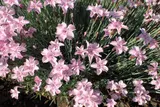
Feathered pink

Dianthus plumarius

Full sun 0.15–0.61 m × 0.3–0.61 m Flowers May–August to −40 °C
Flower colours Click a colour

In short a 10-second read

SunFull sun
Size0.15–0.61 m
spacing 30 cm
FlowersMay–August
PlantingApril–May
WinterNo winter protection

Where to plant and how much to water

Sun, soil and water.

It grows best in full sun, in dry to average soil.

Sun

Sun6 hours or more
Part shade3–6 hours
Shadeunder 3 h

Soil

tolerates any pH
acidicneutralalkaline
dry to averagesandyloamy

Watering

let the surface dry between wateringsdo not waterlogless when it rains

Frost

−40 °C
no winter protectiongreen in winter too

How much space it takes

Mature size.

The mature plant next to a person (175 cm).

50 cm1 m1.5 m0.15–0.61 mspread 0.3–0.61 m
0.15–0.61 m× spread 0.3–0.61 m

Plant 30 cm apart.

Reaches maturity in about 2–5 years. The final size depends on the cultivar and the spot — we give the range from smallest to largest.

Calendar

Through the year.

Months for Central Europe. The line shows the current month.

The year at a glance

Flowers: JanuaryFlowers: FebruaryFlowers: MarchFlowers: AprilFlowers: MayFlowers: JuneFlowers: JulyFlowers: AugustFlowers: SeptemberFlowers: OctoberFlowers: NovemberFlowers: DecemberPlanting: JanuaryPlanting: FebruaryPlanting: MarchPlanting: AprilPlanting: MayPlanting: JunePlanting: JulyPlanting: AugustPlanting: SeptemberPlanting: OctoberPlanting: NovemberPlanting: DecemberFeeding: JanuaryFeeding: FebruaryFeeding: MarchFeeding: AprilFeeding: MayFeeding: JuneFeeding: JulyFeeding: AugustFeeding: SeptemberFeeding: OctoberFeeding: NovemberFeeding: DecemberJanFebMarAprMayJunJulAugSepOctNovDec
FlowersPlantingFeeding
Now, in October: nothing to do — the next job is in April.
JanFebMarAprMayJunJulAugSepOctNovDec

Flowers

JanFebMarAprMayJunJulAugSepOctNovDec

May–August · pink, red or white

Planting

JanFebMarAprMayJunJulAugSepOctNovDec

container plant: April–May

Feeding

JanFebMarAprMayJunJulAugSepOctNovDec

March–May

Feeding

Nutrition.

Light
compost or mulchbalanced fertiliser
JanFebMarAprMayJunJulAugSepOctNovDec

Pests and diseases

Common problems and what to do.

The most common problems in Central Europe. Protection is listed from the gentlest option.

What you will see

Irregular holes in soft leaves and young shoots and slime trails; they feed at night.

How to protect

  1. Prevention
    • Plant sturdy potted plants, not delicate young seedlings.
    • Water in the morning, not the evening (evening watering helps them move around).
    • Encourage their natural enemies: birds, hedgehogs, toads, ground beetles.
  2. By hand evening, after rainPick them off by hand on damp evenings and take them far away. Traps: hollowed-out citrus halves placed cut side down, or sunken containers of beer; check in the morning.
  3. Biological when the soil is warm and moistSlug-specific nematodes (from a biological control supplier) are watered into the soil.
  4. Chemical — only when nothing else helps according to the product labelLast resort only: a product authorised in your country against slugs and snails. Try non-chemical methods first.
Slugs and snailspest

What you will see

Irregular holes in soft leaves and young shoots and slime trails; they feed at night.

How to protect

  1. Prevention
    • Plant sturdy potted plants, not delicate young seedlings.
    • Water in the morning, not the evening (evening watering helps them move around).
    • Encourage their natural enemies: birds, hedgehogs, toads, ground beetles.
  2. By hand evening, after rainPick them off by hand on damp evenings and take them far away. Traps: hollowed-out citrus halves placed cut side down, or sunken containers of beer; check in the morning.
  3. Biological when the soil is warm and moistSlug-specific nematodes (from a biological control supplier) are watered into the soil.
  4. Chemical — only when nothing else helps according to the product labelLast resort only: a product authorised in your country against slugs and snails. Try non-chemical methods first.
More about this problem

What you will see

Colonies of tiny insects on shoots and buds, sticky honeydew, curled leaves.

How to protect

  1. Prevention
    • Check plants regularly from spring.
    • Encourage ladybirds, hoverflies, lacewings and parasitic wasps.
  2. By hand as soon as it appearsRub off colonies by hand or wash them off with a jet of water.
  3. Biological spring to summerRelease lacewing larvae, aphid midge larvae or ladybirds.
  4. Gentle spray in a heavy infestation, repeatPotassium soap (fatty acids) or plant oil.
  5. Chemical — only when nothing else helps only as a last resortA product authorised in your country against aphids.
Aphidspest

What you will see

Colonies of tiny insects on shoots and buds, sticky honeydew, curled leaves.

How to protect

  1. Prevention
    • Check plants regularly from spring.
    • Encourage ladybirds, hoverflies, lacewings and parasitic wasps.
  2. By hand as soon as it appearsRub off colonies by hand or wash them off with a jet of water.
  3. Biological spring to summerRelease lacewing larvae, aphid midge larvae or ladybirds.
  4. Gentle spray in a heavy infestation, repeatPotassium soap (fatty acids) or plant oil.
  5. Chemical — only when nothing else helps only as a last resortA product authorised in your country against aphids.
More about this problem

What you will see

White powdery coating on leaves, stems and flowers; leaves may become distorted.

How to protect

  1. Prevention
    • Destroy fallen infected leaves in autumn; do not over-feed, and protect from drought (stress invites powdery mildew).
  2. By hand autumnPrune out infected shoots early and destroy fallen leaves.
Powdery mildewsdisease

What you will see

White powdery coating on leaves, stems and flowers; leaves may become distorted.

How to protect

  1. Prevention
    • Destroy fallen infected leaves in autumn; do not over-feed, and protect from drought (stress invites powdery mildew).
  2. By hand autumnPrune out infected shoots early and destroy fallen leaves.
More about this problem

What you will see

Pale spots on leaves that turn into spore pustules mainly on the underside of leaves (orange, yellow, brown, black or white); in severe attacks yellowing and early leaf drop.

How to protect

  1. Prevention
    • Grow in warmth, sun and free-draining soil; tarragon dislikes damp, so do not overwater.
    • Clear fallen leaves, remove diseased parts quickly, clean tools and weed.
    • Do not over-feed with nitrogen — soft new growth is quickly attacked.
  2. By handFor light attacks, strip off affected leaves early; remove large amounts carefully. Do not compost summer/autumn debris (spores overwinter).
  3. Chemical — only when nothing else helpsFungicides are not recommended; for edible crops, gardeners have no fungicides available with good efficacy against rust.
Rustsdisease

What you will see

Pale spots on leaves that turn into spore pustules mainly on the underside of leaves (orange, yellow, brown, black or white); in severe attacks yellowing and early leaf drop.

How to protect

  1. Prevention
    • Grow in warmth, sun and free-draining soil; tarragon dislikes damp, so do not overwater.
    • Clear fallen leaves, remove diseased parts quickly, clean tools and weed.
    • Do not over-feed with nitrogen — soft new growth is quickly attacked.
  2. By handFor light attacks, strip off affected leaves early; remove large amounts carefully. Do not compost summer/autumn debris (spores overwinter).
  3. Chemical — only when nothing else helpsFungicides are not recommended; for edible crops, gardeners have no fungicides available with good efficacy against rust.
More about this problem

What you will see

Wilting and yellowing of one side of the plant, browning of tissue in the stem.

How to protect

  1. Prevention
    • Free-draining soil, change of planting site.
    • Healthy planting material.
  2. By hand as soon as it is foundDig up affected plants and dispose of them away from the compost.
Fusarium wiltdisease

What you will see

Wilting and yellowing of one side of the plant, browning of tissue in the stem.

How to protect

  1. Prevention
    • Free-draining soil, change of planting site.
    • Healthy planting material.
  2. By hand as soon as it is foundDig up affected plants and dispose of them away from the compost.
More about this problem

What you will see

Softening of the crown and roots; the plant wilts and browns despite watering.

How to protect

  1. Prevention
    • Free-draining soil, no waterlogging (especially in winter).
    • Do not plant too deep.
  2. By hand at the first symptomsDig up the affected plant; improve the soil with drainage; do not replant in the same place.
Root and crown rotdisease

What you will see

Softening of the crown and roots; the plant wilts and browns despite watering.

How to protect

  1. Prevention
    • Free-draining soil, no waterlogging (especially in winter).
    • Do not plant too deep.
  2. By hand at the first symptomsDig up the affected plant; improve the soil with drainage; do not replant in the same place.
More about this problem

What you will see

Silvery speckling of leaves and flowers.

How to protect

  1. Prevention
    • Outdoors, plants usually survive even with silvery speckling; encourage natural enemies.
  2. BiologicalPredatory bug Orius laevigatus and mites (mainly in the greenhouse).
Thripspest

What you will see

Silvery speckling of leaves and flowers.

How to protect

  1. Prevention
    • Outdoors, plants usually survive even with silvery speckling; encourage natural enemies.
  2. BiologicalPredatory bug Orius laevigatus and mites (mainly in the greenhouse).
More about this problem

What you will see

Leaves are speckled and bronzing, with fine webbing on the underside.

How to protect

  1. Prevention
    • Reduce dust and water stress; do not use broad-spectrum insecticides, which cause mite outbreaks.
  2. By handA strong jet of water on the underside of leaves.
  3. Gentle sprayInsecticidal soap or oil, thoroughly on the undersides; only after mites are confirmed.
Spider mitespest

What you will see

Leaves are speckled and bronzing, with fine webbing on the underside.

How to protect

  1. Prevention
    • Reduce dust and water stress; do not use broad-spectrum insecticides, which cause mite outbreaks.
  2. By handA strong jet of water on the underside of leaves.
  3. Gentle sprayInsecticidal soap or oil, thoroughly on the undersides; only after mites are confirmed.
More about this problem
Caterpillarspest

What you will see

Eaten leaves.

How to protect

  1. Prevention
    • Regular checks.
  2. By hand once noticedPick off caterpillars by hand.
More about this problem

What you will see

Mottled or distorted leaves.

How to protect

  1. Prevention
    • Clean tools, healthy plants.
  2. By hand once noticedDig up and destroy affected plants; viruses cannot be treated.
Plant virusesdisease

What you will see

Mottled or distorted leaves.

How to protect

  1. Prevention
    • Clean tools, healthy plants.
  2. By hand once noticedDig up and destroy affected plants; viruses cannot be treated.
More about this problem
Sources (11)

Frequently asked

Quick answers.

When does feathered pink flower?

In May–August; the flowers are pink, red or white.

Does feathered pink tolerate shade?

No, it needs full sun.

How much space does feathered pink need?

At maturity 0.3–0.61 m wide and 0.15–0.61 m tall; recommended spacing 30 cm.

Slugs and snails — what can you do?

Plant sturdy potted plants, not delicate young seedlings. Pick them off by hand on damp evenings and take them far away. Traps: hollowed-out citrus halves placed cut side down, or sunken containers of beer; check in the morning.

Aphids — what can you do?

Check plants regularly from spring. Rub off colonies by hand or wash them off with a jet of water.

Sources (9) Checked 24 October 2026

Similar plants

Have a look at these too.

Design a bed with this plant in Studio