Climber · Ranunculaceae family

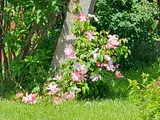
Large-flowered clematis

Clematis (Large-flowered Hybrids)

Full sun to part shade 1.5–4 m × 0.5–1.8 m Flowers May–September to −23 °C
Flower colours Click a colour

In short a 10-second read

SunFull sun to part shade
Size1.5–4 m
spacing 1 m
FlowersMay–September
PlantingMarch–May, September–October
WinterNo winter protection

Where to plant and how much to water

Sun, soil and water.

It grows best in full sun to part shade, in average to moist soil.

Sun

Sun6 hours or more
Part shade3–6 hours
Shadeunder 3 h

Soil

tolerates any pH
acidicneutralalkaline
average to moistclayloamysandy

Watering

keep the soil evenly moistregularly until establishedless when it rains

Frost

−23 °C
no winter protectionleafless in winter

How much space it takes

Mature size.

The mature plant next to a person (175 cm).

1 m2 m3 m4 m1.5–4 mspread 0.5–1.8 m
1.5–4 m× spread 0.5–1.8 m

Plant 1 m apart.

Reaches maturity in about 2–5 years. The final size depends on the cultivar and the spot — we give the range from smallest to largest.

Calendar

Through the year.

Months for Central Europe. The line shows the current month.

The year at a glance

Flowers: JanuaryFlowers: FebruaryFlowers: MarchFlowers: AprilFlowers: MayFlowers: JuneFlowers: JulyFlowers: AugustFlowers: SeptemberFlowers: OctoberFlowers: NovemberFlowers: DecemberPlanting: JanuaryPlanting: FebruaryPlanting: MarchPlanting: AprilPlanting: MayPlanting: JunePlanting: JulyPlanting: AugustPlanting: SeptemberPlanting: OctoberPlanting: NovemberPlanting: DecemberFeeding: JanuaryFeeding: FebruaryFeeding: MarchFeeding: AprilFeeding: MayFeeding: JuneFeeding: JulyFeeding: AugustFeeding: SeptemberFeeding: OctoberFeeding: NovemberFeeding: DecemberJanFebMarAprMayJunJulAugSepOctNovDec
FlowersPlantingFeeding
Now, in October: a good time for planting (container plant).
JanFebMarAprMayJunJulAugSepOctNovDec

Flowers

JanFebMarAprMayJunJulAugSepOctNovDec

May–September · pink, red, purple, white or blue

Planting

JanFebMarAprMayJunJulAugSepOctNovDec

container plant: March–May, September–October

Feeding

JanFebMarAprMayJunJulAugSepOctNovDec

March–August

What to plant now (October) full list in October (244) →

Feeding

Nutrition.

Light
compost or mulchbalanced fertiliser
JanFebMarAprMayJunJulAugSepOctNovDec

Pests and diseases

Common problems and what to do.

The most common problems in Central Europe. Protection is listed from the gentlest option.

High riskMedium riskLow riskRisk for this plant according to the source · no label = no documented level

Clematis wilt

Calophoma clematidina
High riskdiseasesource covers the whole genus

What you will see

Rapid wilting and death of shoots; the stem turns black inside.

The source says: wilt has long been a serious problem in clematis.

How to protect

  1. Prevention
    • Deep soil preparation and mulch reduce root stress; disinfect pruning tools. Large-flowered hybrids are the most susceptible to wilt.
  2. By handCut wilting stems back to healthy tissue and destroy them; new shoots often regrow from ground level.
  3. Chemical — only when nothing else helpsNo products exist for this disease.
Clematis wiltdiseaseHigh risk

What you will see

Rapid wilting and death of shoots; the stem turns black inside.

The source says: wilt has long been a serious problem in clematis.

How to protect

  1. Prevention
    • Deep soil preparation and mulch reduce root stress; disinfect pruning tools. Large-flowered hybrids are the most susceptible to wilt.
  2. By handCut wilting stems back to healthy tissue and destroy them; new shoots often regrow from ground level.
  3. Chemical — only when nothing else helpsNo products exist for this disease.
Slugs and snails

Slugs and snails

pestsource covers the whole genus
More about this problem

What you will see

Irregular holes in leaves and slime trails, especially on young plants in damp weather.

How to protect

  1. Prevention
    • Changing growing practices is the best strategy; protect young plants.
  2. By handEvening collection by torchlight in damp weather; barriers (copper tape, wool pellets).
  3. Biological moist, warm soilPhasmarhabditis hermaphrodita nematodes watered into the soil.
Slugs and snailspest

What you will see

Irregular holes in leaves and slime trails, especially on young plants in damp weather.

How to protect

  1. Prevention
    • Changing growing practices is the best strategy; protect young plants.
  2. By handEvening collection by torchlight in damp weather; barriers (copper tape, wool pellets).
  3. Biological moist, warm soilPhasmarhabditis hermaphrodita nematodes watered into the soil.
More about this problem
Aphids

Aphids

Aphidoidea
pestsource covers the whole genus
More about this problem

What you will see

Clusters of tiny sap-sucking insects on young shoots, curled leaves, sticky honeydew and sooty mould.

When to look

Spring – summer

How to protect

  1. Prevention
    • Aphids are part of a healthy garden and food for predators; a healthy plant usually tolerates them.
  2. By handWipe or rinse off colonies and remove affected tips.
  3. BiologicalEncourage natural enemies (ladybirds, earwigs, birds).
Aphidspest · spring – summer

What you will see

Clusters of tiny sap-sucking insects on young shoots, curled leaves, sticky honeydew and sooty mould.

When to look

Spring – summer

How to protect

  1. Prevention
    • Aphids are part of a healthy garden and food for predators; a healthy plant usually tolerates them.
  2. By handWipe or rinse off colonies and remove affected tips.
  3. BiologicalEncourage natural enemies (ladybirds, earwigs, birds).
More about this problem

Clematis slime flux

diseasesource covers the whole genus

What you will see

Wilting with a foul-smelling slimy ooze from a damaged stem.

When to look

Spring

How to protect

  1. Prevention
    • Protect from wind and frost; work carefully around the roots.
  2. By handCut out the stem below the slime; the plant often regrows.
  3. Chemical — only when nothing else helpsNo products exist.
Clematis slime fluxdisease · spring

What you will see

Wilting with a foul-smelling slimy ooze from a damaged stem.

When to look

Spring

How to protect

  1. Prevention
    • Protect from wind and frost; work carefully around the roots.
  2. By handCut out the stem below the slime; the plant often regrows.
  3. Chemical — only when nothing else helpsNo products exist.
Honey fungus

Honey fungus

Armillaria
diseasesource covers the whole genus
More about this problem

What you will see

Rotting roots, white mycelium under the bark, black bootlaces (rhizomorphs) in the soil, sudden death; mushrooms in autumn.

When to look

Summer – autumn

How to protect

  1. Prevention
    • Choose species that honey fungus rarely attacks (e.g. Vaccinium).
  2. By handA deep barrier (45 cm) of rubber sheeting in the soil blocks the bootlaces; regular deep cultivation breaks them.
Honey fungusdisease · summer – autumn

What you will see

Rotting roots, white mycelium under the bark, black bootlaces (rhizomorphs) in the soil, sudden death; mushrooms in autumn.

When to look

Summer – autumn

How to protect

  1. Prevention
    • Choose species that honey fungus rarely attacks (e.g. Vaccinium).
  2. By handA deep barrier (45 cm) of rubber sheeting in the soil blocks the bootlaces; regular deep cultivation breaks them.
More about this problem
Sources (6)

What to combine it with

Same needs, different flowering.

They share the same sun and soil and flower in other months — so the bed flowers for longer.

Frequently asked

Quick answers.

When does large-flowered clematis flower?

In May–September; the flowers are pink, red, purple, white or blue.

Does large-flowered clematis tolerate shade?

It tolerates part shade (3–6 hours of sun), but not full shade.

How much space does large-flowered clematis need?

At maturity 0.5–1.8 m wide and 1.5–4 m tall; recommended spacing 1 m.

Slugs and snails — what can you do?

Changing growing practices is the best strategy; protect young plants. Evening collection by torchlight in damp weather; barriers (copper tape, wool pellets).

Aphids — what can you do?

Aphids are part of a healthy garden and food for predators; a healthy plant usually tolerates them. Wipe or rinse off colonies and remove affected tips.

Sources (8) Checked 23 October 2026

Similar plants

Have a look at these too.

Design a bed with this plant in Studio