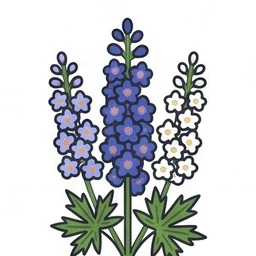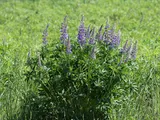
Perennial · Fabaceae family

Bigleaf lupine

Lupinus polyphyllus

Full sun to part shade 1–1.5 m × 0.5–1 m Flowers May–July to −20 °C
Flower colours Click a colour

In short a 10-second read

SunFull sun to part shade
Size1–1.5 m
spacing 60 cm
FlowersMay–July
PlantingMarch–May, September–November
WinterNo winter protection

Where to plant and how much to water

Sun, soil and water.

It grows best in full sun to part shade, in average soil.

Sun

Sun6 hours or more
Part shade3–6 hours
Shadeunder 3 h

Soil

acidic to neutral soil
acidicneutralalkaline
averagesandyloamy

Watering

do not waterlogless when it rains

Frost

−20 °C
no winter protectiondies back in winter, regrows in spring

How much space it takes

Mature size.

The mature plant next to a person (175 cm).

50 cm1 m1.5 m1–1.5 mspread 0.5–1 m
1–1.5 m× spread 0.5–1 m

Plant 60 cm apart.

Reaches maturity in about 2–5 years. The final size depends on the cultivar and the spot — we give the range from smallest to largest.

Calendar

Through the year.

Months for Central Europe. The line shows the current month.

The year at a glance

Flowers: JanuaryFlowers: FebruaryFlowers: MarchFlowers: AprilFlowers: MayFlowers: JuneFlowers: JulyFlowers: AugustFlowers: SeptemberFlowers: OctoberFlowers: NovemberFlowers: DecemberPlanting: JanuaryPlanting: FebruaryPlanting: MarchPlanting: AprilPlanting: MayPlanting: JunePlanting: JulyPlanting: AugustPlanting: SeptemberPlanting: OctoberPlanting: NovemberPlanting: DecemberJanFebMarAprMayJunJulAugSepOctNovDec
FlowersPlanting
Now, in October: a good time for planting (container plant).
JanFebMarAprMayJunJulAugSepOctNovDec

Flowers

JanFebMarAprMayJunJulAugSepOctNovDec

May–July · blue, purple or red

Planting

JanFebMarAprMayJunJulAugSepOctNovDec

container plant: March–May, September–November

Feeding

Nutrition.

No feeding

Pests and diseases

Common problems and what to do.

The most common problems in Central Europe. Protection is listed from the gentlest option.

High riskMedium riskLow riskRisk for this plant according to the source · no label = no documented level

Lupin anthracnose

Colletotrichum spp.
High riskdisease

What you will see

Brown dead patches on leaves, leaf stalks and stems, covered in orange slimy spores in wet weather; the leaf stalks coil like a corkscrew.

The source says: it is the most damaging disease of ornamental lupins.

When to look

Spring and summer, especially in wet weather

How to protect

  1. Prevention
    • Inspect plants carefully before buying.
    • Do not plant densely so that air can circulate, and avoid overhead watering.
    • Do not save seed from affected plants.
  2. By hand as soon as it appearsIf only one or two leaves are affected, pick them off and destroy them; remove badly affected plants and clear any debris from the soil.
  3. By hand if it recursIf infection recurs, replace the lupins with another herbaceous plant.
Lupin anthracnosedisease · spring and summer, especially in wet weatherHigh risk

What you will see

Brown dead patches on leaves, leaf stalks and stems, covered in orange slimy spores in wet weather; the leaf stalks coil like a corkscrew.

The source says: it is the most damaging disease of ornamental lupins.

When to look

Spring and summer, especially in wet weather

How to protect

  1. Prevention
    • Inspect plants carefully before buying.
    • Do not plant densely so that air can circulate, and avoid overhead watering.
    • Do not save seed from affected plants.
  2. By hand as soon as it appearsIf only one or two leaves are affected, pick them off and destroy them; remove badly affected plants and clear any debris from the soil.
  3. By hand if it recursIf infection recurs, replace the lupins with another herbaceous plant.

Lupin aphid

Macrosiphum albifrons
Medium riskpest

What you will see

Large greyish-white aphids form dense colonies on the undersides of leaves and on the flower spikes; the foliage is sticky with honeydew and badly affected plants wilt.

The source says: it is found on lupins and often causes them to wilt.

When to look

JanFebMarAprMayJunJulAugSepOctNovDec
April–September

How to protect

  1. Prevention
    • Tolerate small numbers: aphids are part of a healthy garden.
    • Check lupins often from spring so that you can act in time.
    • Encourage their natural enemies: ladybirds, ground beetles, hoverflies, parasitoid wasps and earwigs.
  2. By hand as soon as it appearsSquash the colonies with your fingers where practical.
Lupin aphidpest · April–SeptemberMedium risk

What you will see

Large greyish-white aphids form dense colonies on the undersides of leaves and on the flower spikes; the foliage is sticky with honeydew and badly affected plants wilt.

The source says: it is found on lupins and often causes them to wilt.

When to look

JanFebMarAprMayJunJulAugSepOctNovDec
April–September

How to protect

  1. Prevention
    • Tolerate small numbers: aphids are part of a healthy garden.
    • Check lupins often from spring so that you can act in time.
    • Encourage their natural enemies: ladybirds, ground beetles, hoverflies, parasitoid wasps and earwigs.
  2. By hand as soon as it appearsSquash the colonies with your fingers where practical.

What you will see

White powdery coating on leaves, stems and flowers; leaves may become distorted.

The source says: it is among the ornamental plants susceptible to powdery mildew.

How to protect

  1. Prevention
    • Destroy fallen infected leaves in autumn; do not over-feed, and protect from drought (stress invites powdery mildew).
  2. By hand autumnPrune out infected shoots early and destroy fallen leaves.
Powdery mildewsdiseaseMedium risk

What you will see

White powdery coating on leaves, stems and flowers; leaves may become distorted.

The source says: it is among the ornamental plants susceptible to powdery mildew.

How to protect

  1. Prevention
    • Destroy fallen infected leaves in autumn; do not over-feed, and protect from drought (stress invites powdery mildew).
  2. By hand autumnPrune out infected shoots early and destroy fallen leaves.
More about this problem

What you will see

Irregular holes in leaves and slime trails, especially on young plants in damp weather.

How to protect

  1. Prevention
    • Changing growing practices is the best strategy; protect young plants.
  2. By handEvening collection by torchlight in damp weather; barriers (copper tape, wool pellets).
  3. Biological moist, warm soilPhasmarhabditis hermaphrodita nematodes watered into the soil.
Slugs and snailspest

What you will see

Irregular holes in leaves and slime trails, especially on young plants in damp weather.

How to protect

  1. Prevention
    • Changing growing practices is the best strategy; protect young plants.
  2. By handEvening collection by torchlight in damp weather; barriers (copper tape, wool pellets).
  3. Biological moist, warm soilPhasmarhabditis hermaphrodita nematodes watered into the soil.
More about this problem

What you will see

Mottled or distorted leaves.

How to protect

  1. Prevention
    • Clean tools, healthy plants.
  2. By hand once noticedDig up and destroy affected plants; viruses cannot be treated.
Plant virusesdisease

What you will see

Mottled or distorted leaves.

How to protect

  1. Prevention
    • Clean tools, healthy plants.
  2. By hand once noticedDig up and destroy affected plants; viruses cannot be treated.
More about this problem
Sources (7)

Frequently asked

Quick answers.

When does bigleaf lupine flower?

In May–July; the flowers are blue, purple or red.

Does bigleaf lupine tolerate shade?

It tolerates part shade (3–6 hours of sun), but not full shade.

How much space does bigleaf lupine need?

At maturity 0.5–1 m wide and 1–1.5 m tall; recommended spacing 60 cm.

Lupin aphid — what can you do?

Tolerate small numbers: aphids are part of a healthy garden. Squash the colonies with your fingers where practical.

Slugs and snails — what can you do?

Changing growing practices is the best strategy; protect young plants. Evening collection by torchlight in damp weather; barriers (copper tape, wool pellets).

Sources (13) Checked 23 October 2026

Similar plants

Have a look at these too.

Design a bed with this plant in Studio