European larch is the best wood for raised beds in Europe: it is naturally durable (class 3–4 under EN 350), needs no chemical treatment and is safe for organic vegetables. Solid 60 mm larch lasts 15–25 years in an ordinary garden, and 25+ years with good drainage and no standing water. Avoid pressure-treated wood for food crops and cheap untreated pine, which rots within a few years.
Why Wood Choice Matters for Raised Garden Beds
Choosing the right wood for your raised garden bed is one of the most important decisions you'll make. The wood you select determines not only how long your bed will last, but also the safety of your vegetables, the aesthetics of your garden, and your long-term maintenance costs.
While many gardeners focus on dimensions and design, the material itself can mean the difference between a bed that lasts for decades and one that rots away in just a few seasons. Even more critically, if you're growing edibles, you need to ensure your wood choice doesn't leach chemicals into the soil where your tomatoes, lettuce, and herbs are growing.
In this guide, we'll compare the four most common materials used for raised beds, examining their durability, cost, safety, and availability across Europe.
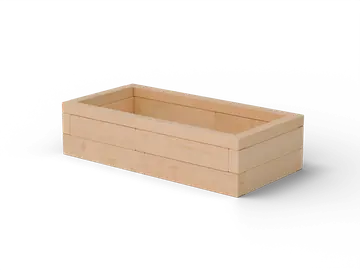
The 4 Materials Compared
1. European Larch (Larix decidua) - The Premium Choice
Durability: 15–25 years untreated at 60 mm thickness
Treatment needed: None
Best for: Long-lasting, chemical-free vegetable gardens
Origin: Central European mountains
European larch is widely considered the gold standard for raised beds in Europe, and for good reason. This deciduous conifer (yes, it loses its needles in winter) produces exceptionally dense, resinous wood that naturally resists rot, fungal decay, and insect damage.
What makes larch special:
- Natural durability class 3-4: European standards classify larch as "moderately durable" to "durable" without any chemical treatment
- High resin content: The wood contains natural resins that repel water and slow fungal growth
- Dense grain structure: Tightly packed growth rings (from slow mountain growth) create a hard, stable material
- Beautiful aging: Larch develops a silvery-gray patina over time that many gardeners love
- Locally sourced: Abundant in the Alps and Carpathians, meaning lower environmental impact for European buyers
GridGarden uses solid 60 mm European larch for its Brick Premium raised bed system.
The downsides: Larch costs more than common construction softwood. However, when you factor in the lifespan difference, the cost per year is actually lower. The wood is also harder to work with (tough on saw blades) due to its density.
2. Cedar (Various Species) - The North American Classic
Durability: 15-20 years untreated
Treatment needed: None
Best for: Premium beds where aesthetics and aroma matter
Origin: North America (import to Europe)
Western Red Cedar (Thuja plicata) has been the traditional choice for North American raised beds for decades. Like larch, cedar contains natural compounds (thujaplicins) that resist decay and insects.
Cedar's advantages:
- Exceptional rot resistance: Durability class 2 (durable)
- Lightweight: Low density makes it easy to handle and transport
- Aromatic: Pleasant scent that repels some insects
- Stable: Minimal warping, twisting, or splitting
- Beautiful red color: Rich tones that weather to silver-gray
The European problem: Cedar is expensive in Europe due to import costs, often matching or exceeding premium larch prices while requiring transcontinental shipping. For European gardeners, locally-sourced larch provides similar performance with a much smaller carbon footprint.
Cedar also tends to be softer than larch, making it more prone to dents and damage during assembly or from garden tools.
3. Pine (Pinus sylvestris) - The Chemical Treatment Dilemma
Durability: 3-5 years untreated, 10-15 years pressure-treated
Treatment needed: Highly recommended
Best for: Non-food applications (ornamental beds, pathways)
Origin: Europe
Pine is the most affordable softwood, but it's also the least naturally durable for outdoor use. Untreated pine in ground contact begins rotting within 3-5 years.
The pressure-treatment issue:
Most pine lumber sold for outdoor use is pressure-treated with chemical preservatives (historically copper-based compounds like ACQ or copper azole). While modern treatments are considered safer than old arsenic-based formulas, they still raise concerns for vegetable gardens:
- Chemical leaching: Copper and other preservatives do leach into surrounding soil, especially when new
- Accumulation risk: Root vegetables and leafy greens can take up heavy metals from the soil over time
- Organic gardening: Organic growing guidelines generally discourage treated wood in contact with food crops
- Unknown long-term effects: Limited research on cumulative exposure through homegrown food
Many gardening authorities recommend avoiding pressure-treated wood for edible gardens entirely.
When pine makes sense: Ornamental flower beds, decorative borders, or applications where the wood doesn't contact soil. For food gardens, the small cost savings aren't worth the potential risks.
4. Composite/Plastic - The Synthetic Alternative
Durability: 20-30 years
Treatment needed: None
Best for: Maintenance-free ornamental gardens
We'd be remiss not to mention non-wood alternatives. Composite lumber (recycled plastic mixed with wood fiber) offers extreme longevity and zero maintenance.
The drawbacks:
- No character: Plastic appearance lacks the warmth and natural beauty of real wood
- Heat retention: Dark composites can get extremely hot in summer sun, potentially damaging plant roots near the walls
- Environmental concerns: Petroleum-based plastics, difficult to recycle at end of life
- Expensive: Often costs more than premium larch
- Leaching questions: Some studies suggest plasticizers and additives may leach into soil
For most gardeners seeking a natural, sustainable solution, untreated wood remains the better choice.
Wood Durability Comparison Table
| Wood Type | Lifespan (Untreated) | Durability Class | Cost (Relative) | Treatment Needed? | Food Safe? |
|---|---|---|---|---|---|
| European Larch (60 mm) | 15–25 years | 3-4 (Durable) | €€€ | No | Yes |
| Cedar | 15-20 years | 2 (Durable) | €€€€ | No | Yes |
| Pine (Untreated) | 3-5 years | 5 (Not Durable) | € | Yes | Yes |
| Pine (Treated) | 10-15 years | 1-2 (Enhanced) | €€ | Already treated | Questionable |
Treated vs. Untreated: The Food Safety Question
For ornamental gardens, pressure-treated wood makes perfect sense. But when growing food, the chemical question becomes critical.
Modern Wood Preservatives
After arsenic-based CCA (chromated copper arsenate) was phased out for residential use in the early 2000s, the industry shifted to copper-based treatments:
- ACQ (Alkaline Copper Quaternary): Copper + quaternary ammonium compounds
- Copper Azole: Copper + azole fungicides
- MCQ (Micronized Copper Quaternary): Finely ground copper particles
While these are "safer" than arsenic, they're still biocides designed to prevent biological decay. Copper can leach from treated wood into the surrounding soil, especially while the wood is new.
Why This Matters for Vegetables
Plants absorb nutrients from soil, but they can also take up contaminants. Root vegetables (carrots, beets, potatoes) and leafy greens are the most exposed to whatever is in the soil around them. While occasional exposure to low copper levels isn't dangerous, gardeners growing food in treated-wood beds face years of cumulative exposure through their harvest.
There is no settled answer on safe exposure levels through homegrown produce, which is exactly why many organic gardeners avoid treated wood entirely.
The Natural Alternative
Naturally durable woods like larch eliminate this dilemma entirely. Their rot resistance comes from compounds in the wood itself (resins, phenols, tannins) that evolved to protect the living tree. You don't add anything to the soil that the tree didn't already contain.
GridGarden's philosophy is simple: if you're investing the time and effort to grow your own organic vegetables, your bed material should support that goal, not undermine it.
Wood Thickness: An Overlooked Factor
Beyond wood species, plank thickness dramatically affects both durability and functionality:
Thin Planks (18-20mm)
- Typical for: Cheap DIY-store beds, shallow herb boxes, temporary setups
- Advantages: Lightweight, cheap, easy to transport
- Limitations: Shortest lifespan (less material to rot away), bow under soil pressure in taller beds
Medium Planks (40mm)
- Typical for: Standard lumber beds 30-50cm tall
- Advantages: Noticeably sturdier than thin boards
- Limitations: Still need bracing on longer sides, and usually screws or metal brackets at the corners
Thick Planks (60mm+)
- Best for: Long-lasting beds of any height, including tall beds for deep-root crops
- Advantages: Maximum lifespan, exceptional strength, premium appearance
- GridGarden uses: Solid 60 mm European larch for the whole Brick Premium system
The thicker the wall, the more wood there is between the soil and the weather — so it takes longer for decay to work its way through, and the wall stays straight under the weight of wet soil. That is why we build every Brick Premium bed from 60 mm larch.
Environmental Considerations
Sustainability-conscious gardeners should consider:
Local Sourcing
Larch grown in Central European mountains requires minimal transportation to reach European customers. Cedar shipped from North America carries a significant carbon footprint.
End-of-Life
Untreated wood can be composted, burned, or returned to soil as hugelkultur material. Treated wood must be disposed of as hazardous waste in many jurisdictions.
Longevity = Sustainability
A larch bed that lasts for decades is more sustainable than replacing a pine bed several times in the same period, even if the initial pine cost was lower.
GridGarden's Wood Philosophy
At GridGarden, we use one material only: solid 60 mm European larch, untreated, for the whole Brick Premium modular system. The blocks are joined with wooden snap-in connectors, so the beds go together without tools and without metal hardware.
Solid 60 mm larch without chemical treatment: in an ordinary garden, count on 15–25 years; with good drainage and no standing water, 25+ years.
We refuse to offer pressure-treated wood or thin planks. If you're growing food for your family, you deserve materials that match your values.
Final Recommendations
Choose Larch if:
- You want a bed that lasts for many years with zero treatment
- You're growing organic vegetables and want wood without chemical preservatives
- You value premium quality and natural beauty
- You're building a permanent garden installation
- You prefer local European sourcing
Untreated Pine only if:
- You need a temporary bed for a season or two
- You accept that it will need replacing within a few years
- You're building beds for non-food plants
Avoid Pressure-Treated Pine for:
- Any vegetable or herb garden
- Children's play areas
- Organic gardening projects
The wood you choose forms the foundation of your raised bed garden, quite literally. By selecting naturally durable, untreated wood like larch, you're investing in both the longevity of your garden and the safety of your harvest. Your tomatoes will thank you.
Key Takeaways
- Larch lasts longest without treatment — solid 60 mm larch: 15–25 years in an ordinary garden, 25+ years with good drainage; untreated pine typically starts to rot within 3-5 years
- Natural rot resistance is key — larch's natural resins and dense grain structure mean no chemical treatment is needed for outdoor use
- Avoid pressure-treated wood for food — copper-based preservatives can leach into soil; use treated wood only for decorative beds or non-food applications
- Thickness matters for longevity — thick planks resist warping, handle soil pressure better and take far longer to decay than thin 18-20mm boards
- Cedar is rare and expensive in Europe — it has to be imported from North America; larch gives similar durability from local European forests
- Cheap softwood is a short-term option — fine for a temporary bed, but expect to replace it within a few years
- Local sourcing lowers the footprint — European larch travels a far shorter distance than imported cedar or exotic timber
- No staining required — larch weathers to an attractive silver-grey patina naturally; staining is cosmetic only