Endless Possibilities: Designing Custom Raised Beds with GridGarden's Modular System
Share
Creating a garden that truly reflects your vision and fits your unique outdoor space can be a challenge with off-the-shelf solutions. Whether you have an awkward corner, a sloped yard, or simply desire a specific layout, conventional raised bed kits often fall short. This is where the power of modular design, like GridGarden's system, transforms your gardening possibilities, enabling you to build custom raised beds tailored to your exact needs and aesthetic preferences.
Why Choose a Modular Raised Bed System for Custom Designs?
Modular raised bed systems offer unparalleled flexibility, allowing gardeners to create custom shapes and sizes that perfectly fit their unique outdoor spaces. Unlike rigid, pre-sized kits, modular components give you the freedom to adapt to irregular garden layouts, navigate existing landscaping features, or even design multi-tiered arrangements. This adaptability is crucial for maximizing growing space in urban environments or making the most of challenging garden plots.
The ability to expand or reconfigure your raised beds over time is another significant advantage. As your gardening ambitions grow or your needs change, a modular system lets you easily add new sections, adjust existing layouts, or even move components to a different area of your garden. This long-term flexibility ensures your initial investment continues to serve your evolving gardening journey. For a deeper dive into the benefits of this approach, explore our article on Modular Raised Beds: Brick System.
Custom designs also provide ergonomic benefits. By tailoring the dimensions, you can ensure comfortable working heights and widths that minimize bending and straining, making gardening more accessible and enjoyable for everyone. Raised beds are particularly beneficial for organizing plot space and providing easy access, a feature often prioritized in community and school gardens, as noted by the University of Georgia Extension.
How Does GridGarden's Modular System Work for Custom Shapes?
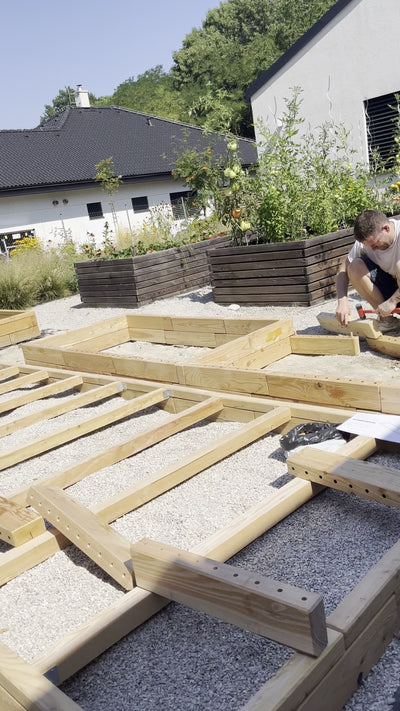
GridGarden's Brick Premium system uses robust 60mm larch planks and a unique snap-in connector mechanism, enabling easy assembly of rectangular, L-shape, U-shape, and truly custom configurations. Our design philosophy centers on simplicity and strength. Each 60mm thick plank of European red larch (Larix decidua) is precisely milled to interlock with our proprietary connectors, forming a sturdy and durable structure.
The beauty of this system lies in its straightforward assembly. You don't need specialized tools or extensive DIY experience. The planks slide and snap into the connectors, allowing you to build your desired shape block by block. This means you can create intricate designs such as zig-zags, octagons, or even beds that wrap around existing trees or garden features. The modularity extends beyond just the perimeter; you can also use internal connectors to create dividers within larger beds, separating different crops or soil types.
To visualize and plan your custom raised bed, our free 3D configurator, GridGarden Studio, is an invaluable tool. It allows you to drag and drop components, adjust dimensions, and see your design come to life in real-time. This interactive experience ensures that your custom bed will fit perfectly into your space before you even place an order. Ready to start designing? Try our Bed Wizard configurator today.
What Materials Are Best for Durable Custom Raised Beds?
For durable custom raised beds, European red larch (Larix decidua) is an excellent choice, particularly in 60mm thickness, due to its natural resistance to decay without chemical treatment. The material you choose for your raised bed is a critical factor influencing its lifespan, appearance, and environmental impact. While many options exist, from thin spruce boards to plastic or metal, not all are equally suited for the long-term demands of a European garden climate.
GridGarden exclusively uses 60mm thick European red larch for its Brick Premium raised beds. Larch is naturally rich in resins and tannins, which provide inherent protection against moisture, fungi, and insect damage. This natural durability means our beds require no chemical treatment, aligning with sustainable gardening practices and ensuring a safe environment for your edible crops. With good drainage and no standing water, you can expect our 60mm larch beds to last 25+ years, and 15-25 years in an ordinary garden.
In contrast, thinner planks, often found in hardware store kits or DIY projects, such as 18mm or 40mm spruce, typically have a much shorter lifespan, often requiring replacement within 5-10 years. While initially cheaper, the cost of frequent replacements, along with the time and effort involved, can quickly add up. The selection of materials for custom raised garden beds is influenced by local availability, the specific type of bed being constructed, and the allocated budget, as highlighted by the UGA Extension.
Plastic beds, while durable, can degrade over time due to UV exposure, potentially leaching chemicals into the soil, especially with fluctuating temperatures. Metal beds, such as galvanized steel, offer longevity but can heat up significantly in direct sun, potentially stressing plant roots. When designing raised beds, it's important to consider the materials used, alongside the slope of the garden site and the accessibility needs of gardeners, according to the University of Georgia Extension. Our focus on 60mm larch provides a robust, natural, and long-lasting solution.
"When choosing materials, consider the overall environmental consequences of the material selected."
— UGA Extension, Raised Bed Materials
| Material Type | Typical Thickness/Gauge | Pros | Cons | Approx. Lifespan |
|---|---|---|---|---|
| European Red Larch (GridGarden Brick Premium) | 60mm | Naturally durable, no chemical treatment, robust, premium aesthetic, modular. | Higher initial investment than basic DIY options. | 15-25 years (ordinary garden), 25+ years (ideal conditions) |
| Spruce/Pine (DIY/Basic Kits) | 18mm - 40mm | Low initial cost, widely available, easy to work with. | Low natural durability, often requires treatment, prone to rot, shorter lifespan. | 3-10 years (untreated), 5-15 years (treated) |
| Plastic/Recycled Composite | Varies | Lightweight, resistant to rot/pests, often made from recycled materials. | Can degrade from UV, potential chemical leaching, less aesthetic appeal, can be expensive. | 10-20 years |
| Metal (e.g., Galvanized Steel) | Thin gauge (e.g., 0.6-1.0mm) | Very durable, sleek modern look, resistant to pests. | Can heat up in sun, potential for sharp edges, can be costly. | 20-30+ years |
How Can a 3D Configurator Simplify Custom Raised Bed Design?
A 3D configurator like GridGarden Studio allows gardeners to visually design and adjust custom raised beds in real-time, ensuring precise dimensions and ideal placement before construction. Gone are the days of sketching on graph paper or guessing dimensions. Our intuitive online tool provides an immersive experience where you can experiment with different shapes, sizes, and configurations to perfectly match your garden's footprint and your aesthetic preferences.
The GridGarden Studio is more than just a drawing tool; it's a comprehensive planning assistant. You can specify the exact length, width, and height of your beds, choosing from our range of modular planks. As you add or remove sections, the configurator automatically calculates the materials needed, giving you an instant overview of your project. This eliminates guesswork and potential errors, saving you time and ensuring you order exactly what you need.
Furthermore, the configurator includes an AI Garden Designer feature, allowing you to upload a photo of your garden. The AI then generates a realistic render of how your custom raised beds will look in your actual space. This visualization capability is incredibly powerful, helping you make informed decisions about placement, scale, and overall garden aesthetics. It also supports 10 languages, catering to our diverse European customer base.
By using the GridGarden Studio configurator, you can iterate on designs quickly, compare different layouts, and confidently finalize a plan that meets all your requirements. This streamlined process transforms complex custom design into an enjoyable and accessible experience.
What Design Considerations are Crucial for Optimal Raised Bed Performance?
Optimal raised bed performance depends on crucial design considerations such as accessibility, drainage, soil volume, and strategic placement within the garden. A well-designed raised bed not only looks good but also creates an ideal environment for plant growth and makes gardening a pleasure. For example, a key goal of raised beds is to alleviate the need for gardeners to step into them, thereby preventing soil compaction and making access easier, as noted by David Berle and Bob Westerfield.
- Accessibility: Consider the width of your beds. For access from both sides, a maximum width of approximately 120 cm (4 feet) is ideal, allowing you to reach the center without straining. If the bed is against a wall or fence, a narrower width of around 60-90 cm (2-3 feet) is more practical. The height of the bed should also be ergonomic, typically 40-60 cm (16-24 inches) for comfortable working.
- Drainage: Proper drainage is paramount to prevent waterlogging and root rot. Ensure your raised bed is placed on level ground or designed with adequate internal drainage. Our 60mm larch planks naturally allow for some breathability, but a layer of coarse material at the bottom (like gravel or wood chips) can further enhance drainage, especially in areas with heavy clay soil.
- Soil Volume: The height of your raised bed directly impacts the volume of soil it can hold. Deeper beds (40cm+) are better for root crops and provide a more stable environment for plants, requiring less frequent watering. Plan for sufficient soil depth based on what you intend to grow. You can find more practical advice in our How to Start a Raised Bed Garden guide.
- Placement: Sun exposure is vital for most vegetables and herbs. Choose a spot that receives at least 6-8 hours of direct sunlight daily. Also, consider proximity to a water source and ease of access for tools and pathways. The P-Patch Community Gardening Program, for instance, has established criteria for selecting sites for new gardens, emphasizing community connection and practical considerations, as detailed on seattle.gov.
"The goal of the P-Patch Program is to build connections between people through inclusive community gardening."
— City of Seattle P-Patch Program, Create a New Community Garden - Neighborhoods | seattle.gov
Is Customizing Raised Beds Cost-Effective in the Long Run?
While initial costs for quality custom raised beds like GridGarden's Brick Premium might be higher than basic DIY options, their durability, flexibility, and long-term benefits typically make them more cost-effective. Investing in a robust, modular system from the outset can save you significant money and effort over the decades.
Consider the alternative: opting for cheaper, thinner boards (e.g., 18mm spruce) or less durable materials. These often degrade within a few years due to moisture and pests, requiring you to dismantle, replace, and rebuild your beds repeatedly. Each replacement incurs not only material costs but also valuable time and labor. Over a 15-25 year period, the cumulative cost of replacing cheaper beds can easily surpass the initial investment in a premium, long-lasting solution like 60mm larch.
Furthermore, the flexibility of the GridGarden system adds to its long-term value. The ability to expand, reconfigure, or even relocate your beds means your garden can evolve without requiring a complete overhaul. This adaptability prevents wasted materials and ensures your raised beds remain relevant to your gardening needs for many years. The enhanced growing conditions, reduced back strain, and superior aesthetics also contribute to a better overall gardening experience, adding intangible value that contributes to its cost-effectiveness over its impressive lifespan of 15-25 years in an ordinary garden, and 25+ years in ideal conditions.
For more comprehensive information on setting up and maintaining your garden, refer to our Complete Guide to Raised Garden Beds in Europe.
Key Takeaways
- GridGarden's Brick Premium system offers unparalleled flexibility for designing custom raised beds of any shape or size.
- Our modular system uses robust 60mm European red larch planks for exceptional durability and natural rot resistance without chemical treatment.
- The free GridGarden Studio 3D configurator simplifies design, allowing you to visualize and plan your custom beds with precision and ease.
- Crucial design considerations include accessibility, proper drainage, adequate soil volume, and strategic placement for optimal plant growth.
- While a premium investment, GridGarden's durable and flexible custom raised beds prove more cost-effective over their expected 15-25 (or 25+) year lifespan compared to cheaper, short-lived alternatives.
Frequently Asked Questions
How long do GridGarden's raised beds last?
GridGarden's Brick Premium raised beds, made from solid 60 mm larch without chemical treatment, are designed for exceptional longevity. You can expect them to last 15-25 years in an ordinary garden; with good drainage and no standing water, they can last 25+ years.
Can I expand my GridGarden raised bed later?
Yes, absolutely! The GridGarden system is inherently modular and designed for easy expansion. You can purchase additional planks and connectors to extend existing beds, add new sections, or even reconfigure your layout as your gardening needs change over time.
What makes GridGarden's system different from other raised bed kits?
GridGarden stands out primarily due to its unique modular snap-in connector system, allowing for truly custom, expandable designs (L-shape, U-shape, and bespoke configurations, not just rectangles). We exclusively use thick 60mm European red larch for superior durability, and offer a free, advanced 3D configurator (GridGarden Studio) with AI visualization, which is unique in the market.
Is the GridGarden Studio configurator really free?
Yes, the GridGarden Studio 3D configurator is completely free to use. You can design, visualize, and plan as many custom raised beds as you like without any cost or obligation. It's a powerful tool designed to help you bring your garden vision to life effortlessly.
Sources & Further Reading
Last verified: 2026-08-20.
- Create a New Community Garden - Neighborhoods | seattle.gov: Create a New Community Garden - Neighborhoods | seattle.gov, "Create a New Community Garden - Neighborhoods | seattle.gov"
- Raised Garden Bed Dimensions: Raised Garden Bed Dimensions, "Raised Garden Bed Dimensions"
- Raised Bed Materials: Raised Bed Materials, "Raised Bed Materials"
Ready to design your perfect garden? Explore the endless possibilities with GridGarden's modular raised bed system. Start creating your custom raised bed today using our free 3D configurator.
Related Articles

Growing Perennials in Raised Beds: A Guide for Central Europe
25. 08. 2026
From AI Design to Tool-Free Build: Your Dream Garden in a Weekend
22. 08. 2026
Raised Bed Cost Comparison: GridGarden vs. Traditional DIY & Kits in Central Europe
19. 08. 2026