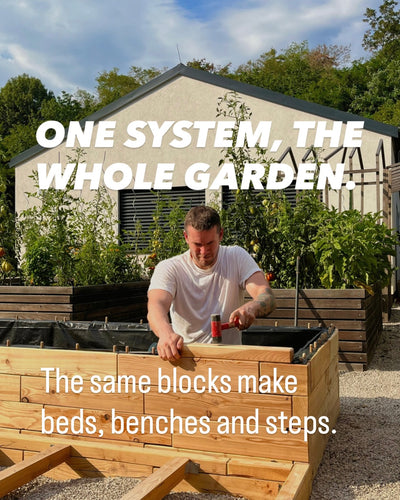
How Much Does a Raised Bed Cost? Budget Guide (2026)
Share
How Much Does a Raised Bed Actually Cost?
A raised bed frame costs between €80 and €2,800 — but that range is useless without context. The real answer depends on three things: what material you choose, how large your bed is, and how long you want it to last. Here is what you can expect to pay in 2026 for a standard 200×100×72 cm bed across Central Europe:
| Material | Price Range | Lifespan | Cost per Year |
|---|---|---|---|
| Spruce / Pine (treated, 18–28 mm) | €80–160 | 5–8 years | €16–20 |
| European Larch (28–60 mm) | €190–500 | 15–25 years | €10–20 |
| Galvanized / Powder-coated Steel | €100–300 | 20–25 years | €5–12 |
| Basic Plastic | €35–250 | 5–10 years | €7–25 |
| WPC Composite | €160–420 | 15–20 years | €10–21 |
| Corten Steel | €449–2,800 | 25–30+ years | €15–93 |
| Stone / Concrete | €500–3,000 | 30–50+ years | €10–60 |
The common "rule of thumb" you will find online — €100 per running metre — holds roughly true for mid-range wood beds. A 2-metre bed at HORNBACH or OBI costs approximately €190–210 in European larch, which aligns with that estimate. But this ignores everything that goes on top of and inside the bed.
For a full breakdown of material pros, cons and durability data, see our wood vs metal vs plastic comparison.
What Are the Hidden Costs Most Buyers Forget?
The bed frame is typically only half the total investment. These additional costs catch many first-time buyers off guard — budget for them before you order:
| Cost Item | Price (200×100×72 cm bed) | Notes |
|---|---|---|
| Filling soil & compost | €100–300 | ~1,400 L total; only top 35% needs purchased soil (~490 L at €0.22–0.42/L). Bottom layers use free garden waste and rough compost. |
| Protective liner (Noppenfolie) | €15–30 | Dimpled membrane between soil and wood. Extends bed life by years. Essential for all wood beds. |
| Rodent mesh (bottom) | €10–25 | Galvanized wire mesh keeps voles and moles out. |
| Soil top-up (every 2–3 years) | €30–60 | Soil settles 20–30 cm in the first year, then ~5 cm/year. The top 20 cm needs refreshing. |
| Wood treatment (spruce only) | €10–30/year | Annual oiling or staining for untreated or KDI spruce. Larch needs no treatment. |
| Delivery (cross-border EU) | €0–50 | Often free within home market. Cross-border adds €20–50 depending on weight and distance. |
Realistic total budget for one complete bed: For a standard 200×100 cm larch bed, plan for €350–600 total — approximately €200 for the frame and €150–300 for soil, liner, mesh and accessories. Our soil mix guide shows how to layer properly and save up to 50% on filling costs by using free garden waste for the bottom layers.
What Does a Raised Bed Cost Over 10 Years?
This is where the real picture changes. A €130 spruce bed that lasts 6 years costs more than a €230 steel bed that lasts 25. Total Cost of Ownership (TCO) — the total you spend over the bed's useful life — is the metric that actually matters:
| Scenario | Purchase | Maintenance (10y) | Replacements | 10-Year Total | Per Year |
|---|---|---|---|---|---|
| Spruce 18 mm (5–8 yr life) | €130 | €200 | €130 (1×) | €460 | €46 |
| Larch 28 mm (15 yr life) | €200 | €100 | €0 | €300 | €30 |
| Larch 60 mm + liner (25+ yr life) | €350 | €60 | €0 | €410 | €16 |
| Galvanized Steel 2 mm (20+ yr life) | €230 | €0 | €0 | €230 | €23 |
| Plastic (JUWEL-type, 8 yr life) | €210 | €0 | €210 (1×) | €420 | €42 |
| Corten Steel (25+ yr life) | €500 | €0 | €0 | €500 | €20 |
The cheapest bed to buy is the most expensive to own. Over 10 years, a €130 spruce bed costs €460 including maintenance and one replacement — nearly double a €230 steel bed that needs zero upkeep. The 28 mm larch bed hits a sweet spot at €300 over 10 years with no replacement needed.
Want to see the exact price for your specific size and material? Our 3D raised bed configurator lets you choose shape, dimensions and wood type — you see the final price instantly, no surprises.
Is It Cheaper to Build a Raised Bed Yourself?
Yes — a DIY raised bed typically costs 30–50% less than an equivalent pre-built kit. But the savings are smaller than most people expect once you account for all materials and your time.
| Cost Component | DIY (Larch) | Pre-Built Kit (Larch) |
|---|---|---|
| Wood / Planks | €80–120 | included |
| Corner posts / brackets | €15–30 | included |
| Screws / hardware | €10–20 | included |
| Cutting / planing (if needed) | €0–30 | included |
| Liner + rodent mesh | €25–55 | €25–55 (often not included) |
| Tools (if not owned) | €0–80 | €0 |
| Assembly time | 2–4 hours | 15–60 min |
| Total (frame only) | €130–280 | €190–350 |
When DIY makes sense: If you own tools, have woodworking experience and enjoy the process. A pallet-based raised bed can be built for under €50 — but expect a lifespan of only 2–4 years with untreated pallet wood.
When a kit makes sense: If you want precise dimensions, pre-cut planks and fast assembly. Modern kit systems — especially modular designs with snap-in connectors — can be assembled in 15–30 minutes with zero tools. The premium you pay buys consistent quality, a proper connection system and expandability.
How Much Does a Raised Bed Cost at Major Retailers?
Here is what you will pay for a comparable larch bed (approximately 200×100 cm) at major European garden retailers in 2026:
| Retailer | Product | Price | Note |
|---|---|---|---|
| HORNBACH | Larch 200×100×72 cm | €198 | Fixed rectangle, screw assembly |
| OBI | Westmann Larch 170×90×84 cm | €210 | Fixed rectangle, slightly smaller |
| OBI | Westmann L-shape 170×170×84 cm | €335 | L-shape, fixed dimensions |
| Lagerhaus (AT) | OKAY Larch 200×100×72 cm | €190 | Fixed rectangle, screw assembly |
These are standard, fixed-dimension beds — one size, one shape. If you need a different size, an L-shape for a corner or want to connect multiple beds, a modular system offers more flexibility at comparable pricing. For a complete overview of what to look for when buying, read our raised bed buying guide. New to raised beds? Our complete guide to raised garden beds covers everything from benefits to assembly.
Which Raised Bed Gives the Best Value for Money?
The "best value" depends on your situation. Here are four common scenarios with our recommendations:
| Your Situation | Best Value Option | Budget (frame only) | Why |
|---|---|---|---|
| Tight budget, first bed | Spruce kit 18 mm, screws | €80–160 | Lowest upfront cost. Good enough to try raised bed gardening. Replace after 5–8 years. |
| Long-term gardener | Larch 60 mm, modular | €300–500 | Lowest cost per year (€12–16/yr over 25+ years). No replacement, no maintenance, expandable. |
| Multiple beds / garden project | Modular system with connectors | varies by layout | Buy once, expand later. L/U shapes from same components. Plan your whole garden in our Garden Manager. |
| Zero maintenance priority | Galvanized or powder-coated steel | €100–300 | No treatment, no replacement, no rot. Lowest 10-year TCO. Less soil insulation than wood in winter. |
Want to see the exact price for your preferred option? Our 3D configurator lets you choose shape, size and material — see the final price in seconds, with no hidden costs.
How Does Wood Thickness Affect the Price and Lifespan?
Thicker planks cost more upfront but last dramatically longer — making them cheaper over their full lifespan. Here is how thickness affects both price and durability for European larch:
| Plank Thickness | Typical Lifespan | Soil Pressure Resistance | Best For |
|---|---|---|---|
| 18–20 mm | 5–8 years | Low — tends to bow outward after 1–2 winters | Budget entry-level, small beds under 120 cm |
| 28 mm (retail standard) | 10–15 years | Adequate for standard sizes | Most common at OBI, HORNBACH. Decent baseline. |
| 40–60 mm | 20–25+ years (with liner) | Excellent — no bowing, handles freeze-thaw cycles | Long-term investment, large beds, harsh climates |
European larch is rated EN 350 durability class 3–4 — meaning 10–15 years in ground contact without treatment. Thicker planks (40–60 mm) combined with a protective liner push this to 20–25+ years because the outer wood weathers while the core remains intact. Spruce (durability class 4) reaches only 5–8 years even with pressure treatment. For a deep-dive into wood species, see our guide to the best wood for raised beds.
How Much Does It Cost to Fill a Raised Bed?
Filling is the cost most buyers underestimate. A standard 200×100×72 cm bed holds approximately 1,400 litres — but you do not need to fill it entirely with purchased soil.
The three-layer method saves up to 50%:
- Bottom layer (40%): ~560 L of branches, wood chips, straw — free from your garden or local tree trimmers
- Middle layer (25%): ~350 L of rough compost, grass clippings, leaves — free if you compost, or €30–60 from a municipal composting facility
- Top layer (35%): ~490 L of quality raised bed soil — €105–210 at retail prices (€0.22–0.42/L depending on brand and quantity)
Realistic filling cost: €100–210 if you use the three-layer method. Up to €350–500 if you buy premium pre-mixed raised bed soil for the entire volume. Bulk delivery from landscape suppliers is typically 20–40% cheaper than buying bags at hardware stores.
For a step-by-step layering guide with exact materials, see our best soil mix for raised beds.
How Can You Reduce the Total Cost?
Six practical ways to reduce what you spend without compromising quality:
- Buy in autumn. The primary buying season is March–April. Retailers discount raised bed stock in September–October to clear inventory. You can save 15–25% and have the bed ready for spring.
- Use the three-layer filling method. Replace expensive purchased soil in the bottom 65% with free garden waste. This saves €100–200 per bed.
- Choose a modular system you can grow. Start with one bed this season. Add a second next year using the same components — no wasted parts, no incompatibility.
- Compare cost per year, not purchase price. A €350 larch bed lasting 25 years costs €14/year. A €130 spruce bed lasting 6 years costs €22/year. The "expensive" bed is actually 35% cheaper.
- Skip unnecessary accessories. A liner (€15–30) and rodent mesh (€10–25) are essential. Decorative trim, built-in trellises and automatic irrigation add cost without proportional value for most gardeners.
- Get your soil delivered in bulk. Bags from hardware stores cost €0.30–0.42 per litre. Loose delivery from a landscape supplier costs €0.08–0.15 per litre — up to 60% less for the same quality.
Key Takeaways
- Total budget: €350–600 for one complete bed — approximately half for the frame, half for soil and accessories. The frame price alone is misleading.
- Cost per year is the metric that matters. A €130 spruce bed costs €46/year over 10 years (with maintenance and replacement). A €350 thick larch bed costs €16/year over 25 years — 65% less per year of use.
- European larch in 28–60 mm thickness offers the best price-durability balance for wood beds — 15–25 years lifespan, no chemical treatment needed, rated EN 350 class 3–4.
- Filling soil is the biggest hidden cost. A standard bed needs ~1,400 L of fill. Use the three-layer method with free garden waste for the bottom 65% to save €100–200.
- Modular systems pay off for multi-bed gardens — same components, any shape, expandable over time. Plan your layout with a garden manager tool before ordering.
Frequently Asked Questions
How much does a basic raised bed cost?
A basic spruce raised bed (200×100 cm) costs €80–160 for the frame. Add €100–200 for soil, €15–30 for a liner and €10–25 for rodent mesh. Realistic total: €200–400 for one complete bed. This is the budget option — expect a lifespan of 5–8 years before needing replacement.
Is a raised bed worth the money?
Yes — raised beds produce 2–3× more yield per square metre than in-ground gardening thanks to better soil, drainage and temperature. A bed costing €400 total can produce €200–400 worth of vegetables per year. Most beds pay for themselves within 1–2 growing seasons. For a full comparison, see our raised bed vs in-ground analysis.
Why is larch more expensive than spruce?
European larch costs approximately 100–150% more than spruce as raw timber (€700–1,000/m³ vs €320–390/m³). The price premium exists because larch is naturally rot-resistant (EN 350 class 3–4) and needs no chemical treatment, while spruce requires pressure impregnation (KDI) to resist decay. Over 20 years, larch is the cheaper choice because you buy once instead of replacing every 5–8 years.
How much soil do I need for a raised bed?
Calculate length × width × height in metres to get cubic metres, then multiply by 1,000 for litres. A 200×100×72 cm bed needs approximately 1,400 litres. With the three-layer method, only the top 35% (~490 L) needs purchased soil — the rest can be free garden waste and compost. Budget €100–210 for the purchased soil portion.
Can I save money by building a raised bed from pallets?
Pallet beds can be built for under €50, but they come with trade-offs: inconsistent wood quality, potential chemical treatment (avoid non-HT-stamped pallets for food growing), and a typical lifespan of 2–4 years. If budget is tight, consider a budget kit with 18 mm spruce planks instead — slightly more expensive but properly designed for soil contact and lasting 5–8 years.
Calculate Your Exact Raised Bed Price
Every garden is different. Use our free 3D raised bed configurator to design your bed exactly as you want it — choose your shape (rectangle, L-shape, U-shape), set your dimensions, pick your wood type and see the complete price instantly. No registration, no hidden fees. Planning multiple beds? Our Garden Manager lets you lay out your entire garden — arrange beds, save your project and order everything at once.
Related Articles
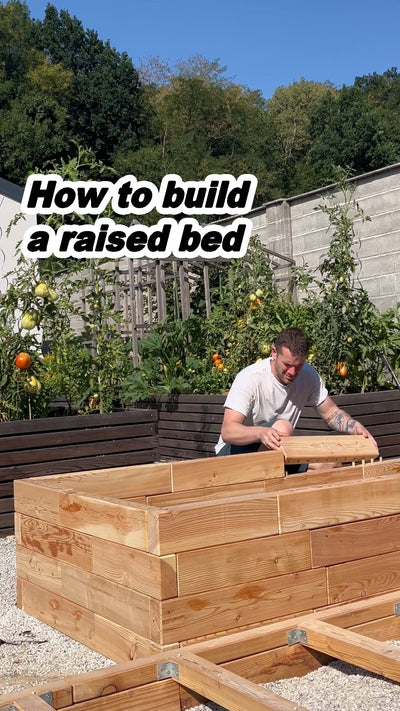
Raised Bed Cost Comparison: Larch vs. Other Materials in Central Europe
26. 08. 2026
Growing Perennials in Raised Beds: A Guide for Central Europe
25. 08. 2026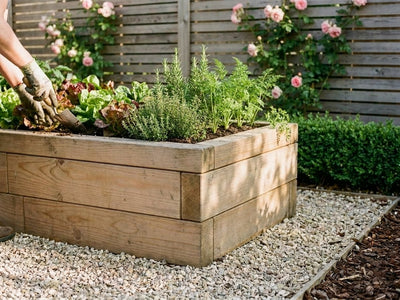
Choosing Your Raised Bed: Larch vs. Metal, Plastic & Composite (A Buyer's Guide)
24. 08. 2026