Raised Bed vs In-Ground Garden: Which Is Right for You?
Share
One of the first decisions every gardener faces is whether to grow vegetables and flowers in traditional in-ground beds or invest in raised garden beds. Both methods have passionate advocates, and the truth is: there's no universally "right" answer. The best choice depends on your soil conditions, physical abilities, budget, and gardening goals.
In this comprehensive guide, we'll compare raised beds and in-ground gardening across all the factors that matter most—from soil quality and drainage to accessibility and long-term costs. By the end, you'll have the knowledge to make the best decision for your unique situation.
What Are Raised Beds and In-Ground Gardens?
In-ground gardens are the traditional method: you prepare the native soil in your yard by tilling, amending with compost, and planting directly into the earth. This is how humans have gardened for thousands of years.
Raised beds are contained garden boxes built above ground level, filled with a custom soil mix. They can be constructed from wood, metal, stone, or composite materials, typically ranging from 15-60 cm in height.
Now let's dive into how these two approaches compare across the most important gardening factors.
1. Soil Quality Control
Raised Beds: Complete Control
With raised beds, you start with a blank slate. You choose exactly what soil mix goes into your beds—whether that's a blend optimized for vegetables, a specialized mix for herbs, or a custom recipe for acid-loving plants like blueberries.
This is especially valuable if your yard has:
- Heavy clay soil that drains poorly and is difficult to work
- Sandy soil that doesn't retain moisture or nutrients
- Rocky or compacted soil
- Contaminated soil (common in urban areas with industrial history)
In-Ground Gardens: Work with What You Have
In-ground gardening requires amending your existing soil over time. While you can certainly improve native soil with compost, aged manure, and other organic matter, it takes years to transform poor soil into excellent growing medium. You're also limited by what's naturally present—if you have heavy clay throughout your property, you'll be fighting that reality every season.
Winner: Raised beds, especially for poor soil conditions or contaminated urban lots.
2. Drainage and Water Management
Raised Beds: Superior Drainage
Elevated beds drain naturally thanks to gravity. The soil in raised beds is also lighter and fluffier (since you control the mix), which promotes healthy root development and prevents waterlogging. This is critical because most vegetable crop failures are caused by overwatering and root rot, not drought.
Plants in raised beds are also easier to water efficiently—you can use drip irrigation or soaker hoses targeted directly at the root zone, reducing water waste.
In-Ground Gardens: Drainage Challenges
If your yard has clay soil or sits in a low area, drainage can be a constant battle. Heavy spring rains may leave your in-ground beds waterlogged for days or weeks, delaying planting and potentially drowning young seedlings.
Winner: Raised beds, particularly in areas with heavy rainfall or clay soil.
3. Pest and Weed Control
Raised Beds: Fewer Invaders
Raised beds create a physical barrier against some pests. While they won't stop everything, they do reduce problems with:
- Slugs and snails: Less likely to climb up into beds
- Burrowing rodents: You can add hardware cloth at the bottom of beds to exclude voles and moles
- Weeds: Starting with weed-free soil means fewer weeds, and those that do appear are easier to spot and remove
Weeding in raised beds is also more comfortable—you're not constantly bending over or kneeling on muddy ground.
In-Ground Gardens: More Pest Pressure
Native soil comes with a resident population of weed seeds that can germinate for years. You'll face ongoing battles with perennial weeds like dandelions, thistles, and grasses. Ground-dwelling pests also have easier access to your plants.
Winner: Raised beds for easier pest and weed management.
4. Ergonomics and Physical Accessibility
Raised Beds: Garden Without Pain
This is where raised beds truly shine. Elevating your growing area to 40-60 cm reduces or eliminates bending and kneeling—the two activities that cause the most back pain for gardeners.
For elderly gardeners, people with mobility issues, or anyone with back or knee problems, raised beds can mean the difference between being able to garden or having to give it up entirely. Taller beds can even be designed for wheelchair accessibility.
In-Ground Gardens: Physical Demands
Traditional gardening requires constant bending, squatting, and kneeling. Over a long gardening session, this takes a toll on your back, knees, and hips. While you can use kneeling pads and garden stools, you're still working in less comfortable positions.
Winner: Raised beds, especially for accessibility and long-term physical comfort.
5. Season Extension
Raised Beds: Warmer Soil, Earlier Planting
Soil in raised beds warms up faster in spring because it's elevated and exposed to more air circulation and sunlight. This means you can plant 2-3 weeks earlier than in-ground beds—a significant advantage for short growing seasons.
Raised beds also make it easier to add season-extending structures like cold frames, row covers, or hoop houses.
In-Ground Gardens: Slower to Warm
Ground-level soil stays cooler longer in spring because it's connected to the thermal mass of the earth below. In cold climates, this can delay planting and reduce the number of harvests you get from crops like lettuce or radishes.
Winner: Raised beds for earlier spring planting and season extension.
6. Visual Appeal and Garden Design
Raised Beds: Structured Beauty
Raised beds create visual order and definition in your landscape. They can transform a scraggly vegetable patch into an attractive garden feature. The clean lines and contained growing areas look intentional and well-maintained.
Modern modular systems like GridGarden's larch and spruce raised beds add natural wood warmth while maintaining a neat, organized appearance that complements any garden style.
In-Ground Gardens: Natural Integration
In-ground beds blend more seamlessly into the natural landscape. Some gardeners prefer this organic, informal look. However, keeping in-ground beds looking tidy requires more edge maintenance and weed control.
Winner: Raised beds for a more polished, intentional appearance; in-ground for naturalistic landscapes. This one's largely personal preference.
7. Space Efficiency
Raised Beds: Intensive Planting
Because raised bed soil stays loose and fluffy, you can practice intensive planting—spacing plants closer together than traditional row gardens. You don't need walking paths between rows because you never step on the growing area, which would compact the soil.
This means raised beds can produce 4-5 times more vegetables per square meter than traditional row gardens.
In-Ground Gardens: More Space Needed
Traditional gardening requires leaving paths for access, and soil compaction from foot traffic reduces productivity in walked-on areas. You need more total space to achieve the same harvest.
Winner: Raised beds for maximizing harvest in limited space.
8. Water Usage
Raised Beds: Targeted Watering
The contained nature of raised beds makes it easy to water efficiently. Drip irrigation or soaker hoses can deliver water directly to plant roots with minimal waste. The improved drainage also means you're less likely to overwater.
In-Ground Gardens: More Water Waste
Watering in-ground beds often means more runoff and evaporation, especially if you're using sprinklers. It's harder to target water precisely where it's needed.
Winner: Raised beds for water conservation.
9. Initial Cost vs. Long-Term Value
Raised Beds: Higher Up-Front Investment
Let's be honest: building or buying raised beds costs money. You'll need materials for the structure (wood, metal, or stone) plus quality soil to fill them. Depending on the size and materials, this can be a significant initial expense.
However, modular systems like GridGarden's Brick Premium design make this more affordable than custom-built beds. The interlocking planks require no screws or specialized tools, reducing both material costs and labor time.
In-Ground Gardens: Lower Initial Cost
Starting an in-ground garden is cheaper—you just need seeds, basic tools, and perhaps some compost. But consider the hidden costs:
- Years of soil amendments to improve poor native soil
- More water usage
- More time spent on weed control
- Potential crop losses from drainage problems or pests
- Possible physical therapy or medical costs from back/knee strain
Winner: In-ground gardens for immediate budget-friendliness; raised beds for long-term value and return on investment.
10. Maintenance and Longevity
Raised Beds: Less Ongoing Work
Once established, raised beds require less maintenance. You'll do less weeding, less soil amending (though you should still add compost annually), and spend less time dealing with pest problems.
Quality wooden beds made from naturally rot-resistant woods like larch can last 15-20 years or more. The modular design also means you can repair or reconfigure beds easily.
In-Ground Gardens: Ongoing Soil Work
In-ground beds need continuous attention to maintain soil quality. You'll amend with compost annually, deal with more weeds, and potentially struggle with compaction and drainage year after year.
Winner: Raised beds for lower long-term maintenance.
Quick Comparison Table
| Factor | Raised Beds | In-Ground Gardens |
|---|---|---|
| Soil Quality Control | Complete control from day one | Must improve native soil over time |
| Drainage | Excellent natural drainage | Depends on native soil type |
| Pest & Weed Control | Fewer weeds and some pest barriers | More weed pressure from seed bank |
| Physical Accessibility | Minimal bending/kneeling required | Constant bending and kneeling |
| Season Extension | Soil warms 2-3 weeks earlier | Slower spring warming |
| Visual Appeal | Structured, organized appearance | Natural, informal look |
| Space Efficiency | 4-5x more productive per m² | Requires more space for paths |
| Water Usage | Efficient targeted watering | More waste from runoff |
| Initial Cost | Higher (materials + soil) | Lower (minimal materials needed) |
| Long-Term Maintenance | Less weeding and soil work | Ongoing soil improvement needed |
So Which Should You Choose?
Choose raised beds if:
- You have poor native soil (clay, sand, rocks, or contamination)
- Your yard has drainage problems or sits in a low area
- You have back, knee, or mobility issues
- You're gardening in a small space and need maximum productivity
- You want to start strong with quality soil from day one
- You prefer a neat, organized garden aesthetic
- You're willing to invest upfront for long-term benefits
Choose in-ground gardens if:
- You have excellent native soil that just needs minor amendments
- You're on a tight budget and can't invest in materials initially
- You have unlimited space and aren't concerned with efficiency
- You prefer a completely naturalistic garden look
- You have no physical limitations and don't mind the extra bending
The Middle Ground: Start Small with Modular Raised Beds
If you're torn between the two approaches, consider starting with a few small raised beds for your most demanding crops (tomatoes, peppers, greens) while maintaining some in-ground space for sprawling plants like pumpkins, potatoes, or corn.
Modern modular systems like GridGarden's Brick Premium design make this approach especially practical. The interlocking plank system requires no screws or special tools—you can assemble a bed in minutes and easily expand, reconfigure, or even move beds as your needs change.
This flexibility means you're not locked into a permanent decision. Start with one or two beds to test the benefits, and expand from there if raised beds work well for you.
Final Thoughts
Both raised beds and in-ground gardens can produce beautiful, abundant harvests. The "best" choice depends entirely on your specific situation—your soil, your physical abilities, your budget, and your gardening goals.
That said, for most home gardeners, raised beds offer enough clear advantages—especially in soil control, drainage, accessibility, and space efficiency—that they're worth the initial investment. The reduced physical strain alone can extend your gardening years by a decade or more, and that's invaluable.
Whatever you choose, the most important thing is to get started. Every garden, whether raised or in-ground, is a step toward fresher food, outdoor time, and the deep satisfaction that comes from growing your own.
Key Takeaways
- Yield advantage is dramatic — Raised beds produce 1.5-2x more per square foot due to better drainage, warmer soil, and intensive planting techniques
- Earlier spring harvests — Raised soil warms 2-3 weeks faster than ground-level beds, extending growing season by 15-20 days on both ends
- Weeding drops 70% — Fresh soil eliminates weed seed banks; mulched raised beds require 10-15 minutes weekly vs 45-60 minutes for in-ground gardens
- Initial cost gap narrows — €200-400 for raised bed materials vs €50-100 for in-ground prep, but raised beds eliminate annual tilling costs (€80-120/year)
- Poor soil becomes irrelevant — Raised beds bypass clay, rocks, or contaminated soil entirely; in-ground gardens require 2-3 years of amendments to fix problem soil
- Accessibility transforms gardening — 18-24 inch tall beds eliminate bending, making gardening possible for people with back pain or mobility issues
- Water efficiency varies — Raised beds dry faster (water 2-3x per week) but drip irrigation reduces consumption by 40% compared to overhead watering
- Perennials prefer ground — Asparagus, rhubarb, and berry bushes need deep root zones; raised beds work best for annuals and intensive crops
Frequently Asked Questions
Are raised beds worth the extra cost?
Yes, if you have poor soil, limited space, or mobility concerns. The €200-400 initial investment pays back in 2-3 years through higher yields, reduced labor, and eliminated soil amendment costs. In-ground gardens cost less upfront but require ongoing maintenance expenses.
Do raised beds need more watering than in-ground gardens?
Yes, raised beds dry out faster due to exposure on all sides. Expect to water 2-3x per week in summer vs 1-2x for in-ground beds. However, drip irrigation or soaker hoses reduce water usage by 40% and solve this issue.
Can I convert an in-ground garden to raised beds?
Absolutely. Place beds directly over existing garden space (no need to remove sod if using 18+ inch depth). The height smothers weeds, and you gain all benefits of raised bed gardening without losing your established garden location.
Which method produces more food?
Raised beds yield 1.5-2x more per square foot due to better soil, earlier planting, and intensive spacing. A 4×8 raised bed (32 sq ft) produces as much as 50-64 sq ft of in-ground garden. For limited space, raised beds are unmatched.
Do I need both raised beds and in-ground space?
Many gardeners use both: raised beds for annuals (tomatoes, lettuce, peppers) and in-ground for perennials (asparagus, berries) or sprawling crops (pumpkins, melons). This hybrid approach maximizes efficiency and flexibility.
Related Articles

Autumn Raised Bed Decorations: Creative Ideas for Central Europe
01. 09. 2026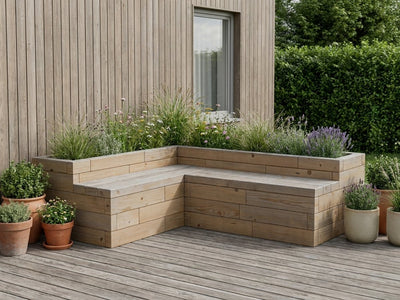
Transform Your Garden Corner: Modular Raised Beds and Integrated Seating
28. 08. 2026
Transforming a Neglected Garden Corner: Design and Build with GridGarden Raised Beds
27. 08. 2026