

Creative Raised Bed Landscaping Ideas for Central European Gardens
Share
Creative Raised Bed Landscaping Ideas for Central European Gardens
Raised garden beds offer more than just a practical solution for cultivation; they are powerful landscaping elements that can define spaces, add structure, and boost the aesthetic appeal of any garden. In Central Europe, with its diverse climates and rich gardening traditions, incorporating raised beds into your landscape design can create a stunning and functional outdoor living area. Whether you're looking for simple garden borders or elaborate garden layouts, the possibilities are vast.
This guide explores creative landscaping ideas for raised beds, tailored for homeowners and garden enthusiasts across Central Europe, from Slovakia and the Czech Republic to Germany, Austria, Poland, Hungary, the Netherlands, France, Italy, and Romania. We'll delve into how to make your raised beds a focal point, enhance their visual appeal, and integrate them seamlessly into your garden's overall design.
How Can Raised Beds Enhance My Garden's Landscape?
Raised beds can significantly improve your garden's landscape by adding structure, defining zones, and improving soil quality, leading to healthier plants and a more organized appearance. They act as natural visual anchors, breaking up flat expanses and creating distinct areas for different purposes, such as vegetable cultivation, herb gardens, or ornamental plantings.
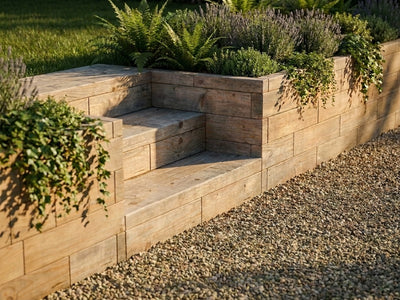
The inherent verticality of raised beds adds a dynamic dimension to garden design. Unlike traditional in-ground gardens, raised beds draw the eye upward, creating a sense of depth and interest. They can be strategically placed to guide pathways, enclose seating areas, or act as striking borders along fences or patios. Furthermore, the improved drainage and soil control offered by raised beds contribute to lusher, more vibrant plant growth, further enhancing the overall visual appeal of your garden.
What Are the Best Materials for Aesthetic Raised Beds in Central Europe?
Selecting the right material is crucial for creating raised beds that are both beautiful and durable, especially considering the varied climatic conditions across Central Europe. The most popular choices balance longevity, aesthetics, and environmental considerations, with natural wood often being a preferred option for its warm appearance and integration with the landscape.
For a premium, long-lasting option, European red larch (Larix decidua) is an excellent choice. This hardwood is naturally resistant to decay and insects, boasting a lifespan of 25+ years, making it ideal for the unpredictable Central European weather. Its rich, reddish-brown hue adds a touch of elegance to any garden. Alternatively, natural stone, such as local granite or limestone, offers a timeless, robust aesthetic that complements traditional garden styles and provides excellent thermal mass. For a more modern look, composite materials or powder-coated steel can be considered, offering durability and a sleek finish. When choosing, consider how the material will weather and integrate with your existing garden features.
How Can I Use Raised Beds as Garden Borders and Edging?
Raised beds can serve as elegant and functional garden borders, creating clear divisions between different garden areas while also providing space for planting. They offer a more substantial and visually appealing alternative to traditional edging materials like wood chips or simple stone borders.
Imagine lining a pathway with a series of low, uniform raised beds filled with colorful annuals or fragrant herbs. This approach not only defines the path but also adds a vibrant splash of color and texture. Similarly, raised beds can delineate the edge of a lawn or a patio, creating a clean, crisp transition. For areas with slopes, raised beds can act as mini retaining walls, preventing soil erosion while creating attractive planting pockets. The modular nature of systems like GridGarden's Brick Premium allows for flexible border designs, enabling you to create straight lines, gentle curves, or even intricate patterns to perfectly match your landscaping vision. These beds can also be integrated with retaining wall designs, as explored further in our article on Raised Beds as Retaining Walls.
What Are Creative Raised Bed Layouts for Different Garden Styles?
The layout of your raised beds can dramatically influence the overall style and functionality of your garden, from formal and structured to informal and organic. Considering the available space and desired aesthetic is key to achieving a harmonious design.
For formal gardens, symmetrical arrangements of rectangular raised beds, perhaps filled with uniformly spaced plants or a single crop, create a sense of order and grandeur. Think of classic kitchen gardens or parterre designs. In contrast, a more informal or cottage-style garden might benefit from an asymmetrical layout of varying bed sizes and shapes, incorporating curves and naturalistic planting. L-shaped and U-shaped raised beds are particularly versatile for creating cozy corners, enclosing a small patio, or maximizing planting space in tighter areas. Our guide to L-Shape & U-Shape Raised Beds offers detailed planning advice for these configurations. For those seeking a truly custom solution, a 3D configurator, like the one offered by GridGarden, allows you to design bespoke layouts that fit your unique garden space perfectly.
How Can I Integrate Raised Beds with Existing Garden Features?
Seamless integration of raised beds with existing garden features is key to a cohesive and professional-looking landscape. This involves considering the materials, colors, and styles of your current garden elements to ensure the raised beds complement rather than clash.
If you have a stone patio, consider using natural stone or brick-effect raised beds to tie in the materials. For gardens with wooden fences or pergolas, larch or other natural wood raised beds will create a harmonious look. Raised beds can also be strategically placed to enhance existing features. For example, a raised bed filled with flowering plants can draw attention to a beautiful tree or a garden sculpture. They can also be used to create visual pathways leading to a shed, a greenhouse, or a seating area. Using the Bed Wizard configurator can help visualize how different shapes and sizes will fit within your existing garden layout. Remember to consider the surrounding plants; choose raised bed designs that allow for complementary planting schemes, ensuring a unified aesthetic.
What Are Some Visually Appealing Planting Ideas for Raised Beds?
The plants you choose for your raised beds are fundamental to their visual appeal and their role in your overall garden landscape. Selecting a mix of textures, colors, and heights can transform a functional bed into a decorative masterpiece.
Consider creating themed planting schemes. A "Mediterranean" bed could feature herbs like rosemary, thyme, and lavender alongside ornamental grasses. A "pollinator" bed filled with bee-friendly flowers such as echinacea, salvia, and sunflowers will not only look beautiful but also support local wildlife. For a striking visual effect, use a combination of upright plants, trailing varieties, and ground cover. For example, tall ornamental grasses or sunflowers can provide height, while bushy perennials like hostas or peonies add mid-level interest, and creeping thyme or sedum can spill over the edges. A technique known as "color blocking," where you plant large swathes of a single color together, can create a bold, modern statement. Alternatively, a more traditional approach involves interplanting vegetables with edible flowers like nasturtiums or calendula for pops of color and added harvest. The key is to think about the plants' mature size and their visual impact throughout the growing season.
How Do I Choose the Right Size and Shape for My Raised Beds?
The ideal size and shape of your raised beds depend on several factors, including the available space, the types of plants you intend to grow, and the desired aesthetic for your garden landscape. Thoughtful planning ensures both functionality and visual harmony.
For accessibility and ease of planting and harvesting, raised beds typically shouldn't be wider than 1.2 meters (approximately 4 feet). This width allows you to reach the center of the bed from either side without stepping into it, which is crucial for maintaining soil structure. The length can vary greatly depending on your space. Rectangular beds are the most common and versatile, fitting well along fences or walls. L-shaped beds are excellent for defining corners or creating cozy seating nooks, while U-shaped beds can enclose a central area, such as a small lawn or a water feature. For smaller gardens or to add intricate detail, consider modular systems that allow for custom configurations, enabling you to create complex shapes and patterns. Using an online configurator can be invaluable here, allowing you to experiment with different dimensions and arrangements before committing.
Can Raised Beds Be Used in Small Gardens or Balconies?
Absolutely! Raised beds are incredibly versatile and can be adapted for even the smallest urban gardens, balconies, or patios. Compact and modular designs are perfect for maximizing limited space and adding greenery to otherwise barren areas.
For balconies and small patios, consider smaller, more contained raised beds, perhaps made from lighter materials or even tiered designs that stack vertically. Window boxes and planter boxes can also function as miniature raised beds. Even a single, well-placed raised bed on a small lawn can add a focal point and a splash of color. The key is to choose dimensions that are proportionate to the space. A narrow, long raised bed can fit along a balcony railing, while a square bed can sit in a corner. The modularity of systems like GridGarden's Brick Premium is a significant advantage, allowing you to start small and expand later if space permits. This adaptability makes them an excellent choice for gardeners who may move or have evolving space constraints.
Raised Bed Materials Comparison: Durability and Aesthetics
Choosing the right material for your raised beds impacts their lifespan, maintenance needs, and overall visual appeal. Here's a comparison of common materials used in Central European gardens:
| Material | Pros | Cons | Typical Lifespan | Aesthetic |
|---|---|---|---|---|
| European Red Larch (60mm planks) | Naturally rot and insect resistant, sustainable, beautiful natural color, modular system compatibility | Higher initial cost compared to softer woods | 25+ years | Warm, natural, premium |
| Spruce/Pine (DIY lumber) | Low cost, widely available, easy to work with | Lower natural resistance to rot and insects, requires treatment for longevity, limited lifespan | 5-15 years (with treatment) | Basic, natural (can be painted) |
| Natural Stone (e.g., Granite, Limestone) | Extremely durable, timeless aesthetic, excellent thermal mass | High cost, labor-intensive installation, heavy | 50+ years | Classic, robust, natural |
| Metal (e.g., Corten Steel, Powder-coated) | Modern aesthetic, durable, lightweight options available | Can get hot in direct sun, potential for rust (Corten) or chipping (powder-coated) | 15-30 years | Modern, industrial, sleek |
When Should I Consider L-Shape or U-Shape Raised Beds?
L-shaped and U-shaped raised beds are ideal for creating defined zones, maximizing corner spaces, and enhancing garden flow. They offer more dynamic design possibilities than simple rectangles.
An L-shaped bed is perfect for tucking into a corner of your property, creating a cozy nook or a dedicated planting area. It can also be used to define the edge of a patio or deck. A U-shaped bed is excellent for enclosing a central feature, such as a small water feature, a statue, or a seating area, effectively creating a 'room' within your garden. These shapes are also fantastic for maximizing planting space in areas with irregular footprints. The ability to configure custom shapes, like those possible with GridGarden's modular system, means you can adapt these designs to fit almost any garden layout. For more in-depth planning, consult our guide on L-Shape & U-Shape Raised Beds.
How Can I Use Raised Beds to Improve Drainage and Soil Quality?
Raised beds inherently improve drainage and soil quality, which is a significant landscaping benefit, especially in areas with heavy clay soil or poor natural drainage. This controlled environment allows for optimal root growth and plant health.
By elevating the planting area above the surrounding ground level, raised beds allow excess water to drain away more freely. This prevents waterlogging, which can suffocate plant roots and lead to disease. Furthermore, you have complete control over the soil composition within the bed. You can mix and match compost, topsoil, and other amendments to create the perfect growing medium for your specific plants. This is particularly beneficial for vegetables and flowers that have particular soil pH or nutrient requirements. The initial setup of a raised bed, as outlined in our article on How to Start a Raised Bed Garden, is a crucial step in ensuring long-term soil health and successful plant cultivation.
What is the lifespan of different raised bed materials?
The lifespan of raised bed materials varies significantly. Untreated softwood like spruce typically lasts 5-10 years, while treated lumber can extend this to 10-15 years. High-quality hardwoods like European red larch, known for its natural resistance, can last 25+ years. Natural stone and high-quality metal (like Corten steel or properly coated aluminum) can last for decades, often exceeding 30-50 years, making them very long-term investments.
Can I combine different types of raised beds in one garden?
Yes, combining different types of raised beds can add visual interest and functionality to your garden. For instance, you might use larger, durable beds made of larch for your main vegetable patch and smaller, decorative beds for herbs or flowers near your patio. The key is to maintain some consistency, perhaps through color, material accent, or overall style, to ensure the garden still feels cohesive.
How do I prevent soil erosion from my raised beds?
Properly constructed raised beds inherently help prevent soil erosion by containing the soil. Ensure the sides are sturdy and that any joints are secure. If your beds are on a slope, consider building them with the front slightly lower than the back to allow water to drain effectively without washing soil away. Planting dense ground cover or low-growing plants around the base can also help stabilize the surrounding soil.
Is it worth investing in premium materials like European red larch?
Investing in premium materials like European red larch (60mm planks) often proves cost-effective in the long run. While the initial purchase price may be higher than for basic lumber, its exceptional durability and resistance to rot and insects mean it will last significantly longer—25+ years—reducing the need for frequent replacements and maintenance. This longevity, combined with its natural beauty, makes it an excellent choice for sustainable and aesthetically pleasing garden landscaping.
How can I use the AI Garden Designer tool?
The AI Garden Designer tool allows you to upload a photo of your garden space and visualize how different raised bed configurations and planting schemes would look. It helps you experiment with layouts, shapes, and plant combinations virtually, making it easier to make informed design decisions before you start building or planting. This tool is particularly useful for understanding how raised beds will integrate with your existing landscape.
- Raised beds enhance garden landscapes by adding structure, defining zones, and improving aesthetics.
- Durable materials like European red larch offer longevity and a premium look for Central European gardens.
- Raised beds can function effectively as decorative garden borders and edging.
- Modular and custom-shaped beds (L, U) provide design flexibility for various garden styles and spaces.
- Strategic plant choices and integration with existing features create a cohesive and visually appealing garden.
Sources & Further Reading
Last verified: 2023-10-27.
- Wood Durability & Properties: "Larch (Larix decidua)", The Wood Database. (Information on the natural properties and durability of European Larch).
- Garden Design Principles: "Raised Bed Gardening", Oregon State University Extension. (General principles and benefits of raised bed gardening applicable across regions).
- Wood Durability Standards: "EN 350:2016 - Durability of wood and wood-based products — Testing and interpretation of results for wood preservatives", European Committee for Standardization. (Standard for wood durability testing).
- Urban Gardening Space Maximization: "Small Space Gardening", Royal Horticultural Society. (Tips for maximizing productivity and aesthetics in limited garden areas).
Ready to bring your creative raised bed landscaping ideas to life? Explore the possibilities with GridGarden's modular system and our intuitive Bed Wizard configurator. Design your dream garden today!
Related Articles
Designing Raised Beds for Challenging Garden Shapes & Slopes (with 3D Planner)
12. 09. 2026
Designing Raised Beds for Sloped Gardens: AI Planning for Terraced & Multi-Level Landscapes
09. 09. 2026
Design Your Dream Garden with AI: Free & No Registration Needed
08. 09. 2026