

Modern Raised Bed Garden Design Ideas: Shapes, Layouts, Materials
Share
As the demand for beautiful, functional, and space-efficient gardens grows across Central Europe, raised beds have emerged as a cornerstone of modern landscaping. Beyond their practical benefits for soil management and accessibility, raised garden beds offer incredible potential for aesthetic enhancement and creative garden design. This guide delves into advanced design ideas tailored for the Central European climate and gardener, focusing on how to elevate your outdoor space with thoughtful planning and innovative solutions.
What are the latest trends in raised bed garden design?
Current trends in raised bed garden design are moving towards greater flexibility, integration with the surrounding landscape, and a focus on sustainability and aesthetics. We're seeing a shift from simple rectangular beds to more organic shapes, modular systems that allow for expansion and reconfiguration, and the incorporation of multiple functions within the garden structure. The use of durable, natural materials that complement local architecture and withstand Central European weather conditions is also paramount. For instance, understanding the best practices for raised garden beds in Europe is crucial for longevity and success.
How can I create a modern and aesthetic raised bed garden?
Achieving a modern and aesthetic raised bed garden involves a cohesive approach to materials, shapes, and planting. Consider using high-quality materials like the 60mm thick European red larch planks from GridGarden's Brick Premium line, known for their durability and natural beauty, offering a lifespan of over 25 years. These planks, combined with a clever snap-in connector system, allow for intricate designs. Moving beyond basic rectangles, explore L-shaped, U-shaped, or even custom configurations using a 3D configurator. These adaptable shapes can define zones within your garden, create pathways, or fit snugly into awkward corners. The key is to ensure the raised beds complement your home's architecture and the surrounding landscape, creating a harmonious and visually appealing outdoor living space.
What are the benefits of modular and expandable raised beds?
Modular and expandable raised bed systems offer unparalleled flexibility for garden design and long-term adaptability. The ability to easily add sections or reconfigure existing beds means your garden can evolve with your needs and your gardening ambitions. This is particularly beneficial for hobby gardeners who might start small and wish to expand later, or for those who enjoy experimenting with different layouts. A system like GridGarden's Brick Premium allows for seamless expansion, enabling you to grow your garden incrementally without significant hassle or cost. This adaptability ensures your garden remains functional and beautiful for years to come, a smart investment for any keen gardener.
How do L-shape and U-shape raised beds enhance garden design?
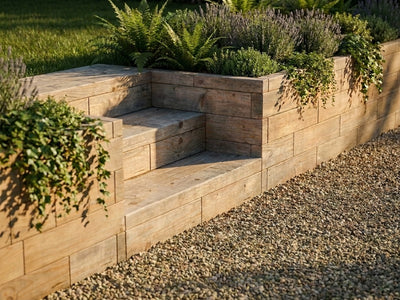
L-shaped and U-shaped raised beds are game-changers for maximizing space and creating dynamic garden layouts. These configurations are ideal for defining corners, creating sheltered seating areas, or framing specific garden features. An L-shape can neatly tuck into a corner, providing ample planting space while maintaining clear pathways. A U-shape can embrace a central element, such as a small tree, a water feature, or a seating area, creating an inviting focal point. This thoughtful use of space is especially valuable in smaller gardens or urban environments where every square meter counts. For detailed planning on incorporating these shapes, consult our L-Shape & U-Shape Raised Beds Planning Guide.
Can raised beds be used as retaining walls or garden borders?
Absolutely, raised beds can serve a dual purpose as both planting containers and structural elements like retaining walls or garden borders. When built with robust materials and proper support, particularly on sloped terrain, raised beds can effectively manage soil erosion and define different levels in your garden. The substantial 60mm thickness of European red larch planks used in premium systems provides the necessary strength and stability for such applications. This not only adds a beautiful, organic edge to your landscape but also solves practical challenges related to topography. Learn more about this dual functionality in our article on Raised Beds as Retaining Walls and Garden Borders.
How does material choice impact raised bed garden aesthetics and longevity?
The choice of material significantly influences both the aesthetic appeal and the lifespan of your raised garden beds. For Central European climates, which can experience varied weather conditions, durable and weather-resistant materials are essential. European red larch (Larix decidua) is an excellent choice, naturally resistant to rot and insects, and capable of lasting over 25 years with minimal maintenance. Its warm, natural tones blend beautifully with most garden settings. While locally sourced spruce lumber can be a DIY option, it typically has a shorter lifespan and requires more frequent treatment compared to larch. Premium materials ensure your garden design remains robust and attractive for many years, reducing the need for frequent replacements.
What are innovative planting and styling ideas for raised beds?
Beyond traditional vegetable and herb gardening, raised beds offer a canvas for creative planting and styling. Consider a "lasagna gardening" approach, layering organic materials to build rich soil over time, which is highly effective in raised beds. Vertical gardening can be integrated by adding trellises or support structures to the sides or back of your beds, allowing climbing plants to add height and visual interest. Companion planting not only maximizes yield but also creates beautiful, diverse plant communities. For styling, think about combining edibles with ornamental plants for a potager-style garden, or dedicating beds to specific themes, like a pollinator garden or a cutting garden. Using an AI Garden Designer tool, which can generate visualizations from a photo, can help you envision these creative planting schemes before you start.
How can I maximize small garden spaces with raised beds?
Raised beds are exceptionally well-suited for small garden spaces and urban environments. Their defined structure helps organize planting areas, making even the most compact plots feel intentional and tidy. Vertical gardening solutions, such as attaching trellises to the sides of beds or using tiered planting systems, can significantly increase growing area without expanding the footprint. L-shaped and U-shaped configurations are also excellent for fitting into corners or creating multi-functional zones. Furthermore, the modular nature of systems like GridGarden's allows you to start with a single bed and gradually add more as space and budget permit. Read more about getting started in our How to Start a Raised Bed Garden guide.
What is the role of a 3D configurator in raised bed garden planning?
A 3D configurator, like the Bed Wizard offered by GridGarden, is an invaluable tool for planning complex or custom raised bed designs. It allows you to visualize your garden layout to scale, experiment with different shapes (rectangular, L-shape, U-shape), sizes, and configurations before committing to a purchase. This interactive tool helps you optimize the use of your space, ensure adequate pathways, and create a design that perfectly matches your aesthetic preferences and functional requirements. It takes the guesswork out of garden planning, enabling you to design with confidence and precision, ensuring the final result is both beautiful and practical.
What are the typical lifespan and maintenance requirements for quality raised beds?
High-quality raised beds constructed from durable materials like European red larch can typically last for 25 years or more with minimal maintenance. The natural properties of larch, such as its resistance to decay and insects, contribute to this longevity. Occasional cleaning to remove debris and checking the stability of the connectors are usually sufficient. Unlike treated lumber or less durable woods, larch often requires no additional chemical treatments, making it a more environmentally friendly option. This long lifespan and low maintenance make premium raised beds a cost-effective and sustainable choice for discerning gardeners across Europe.
Comparison of Raised Bed Materials for Central European Gardens
| Material | Typical Lifespan | Maintenance | Aesthetic Appeal | Notes |
|---|---|---|---|---|
| European Red Larch (60mm) | 25+ years | Low (occasional cleaning) | High (natural, warm tones) | Naturally rot & insect resistant. Modular systems available. |
| Locally Sourced Spruce (DIY) | 5-10 years (untreated) | Moderate to High (requires treatment/sealing) | Variable (can be rustic) | Prone to rot and insect damage if not treated. |
| Composite Materials | 15-25 years | Low (cleaning) | Modern, can mimic wood | Varying quality; potential for fading or warping. |
Key Takeaways
- Embrace modularity and unique shapes (L, U) for flexible and aesthetically pleasing garden designs.
- Invest in durable materials like European red larch for longevity and low maintenance, suitable for Central European climates.
- Integrate vertical gardening and thoughtful planting schemes to maximize small spaces and create visual interest.
- Utilize 3D configurators for precise planning and visualization of custom raised bed layouts.
- Consider the dual function of raised beds as structural elements like retaining walls or garden borders.
Frequently Asked Questions
What is the best wood for raised beds in Central Europe?
For the Central European climate, European red larch (Larix decidua) is an excellent choice for raised beds. It is naturally resistant to decay and insects, has a lifespan of over 25 years, and offers a beautiful aesthetic. Its durability means it can withstand the region's variable weather conditions, from wet springs to dry summers and cold winters, with minimal upkeep.
How can I make my raised bed garden look more professional?
To achieve a professional look, focus on cohesive material choices, clean lines, and thoughtful planting. Using high-quality, durable materials like 60mm larch planks, opting for modular systems that allow for precise configurations (including L and U shapes), and planning your planting with a mix of textures, colours, and heights will elevate the aesthetic. Consistent spacing and well-maintained edges also contribute significantly to a polished appearance.
Can I combine different types of raised beds in one garden?
Yes, combining different types of raised beds can create a dynamic and visually interesting garden. For example, you could use larger, sturdy beds for structural purposes or retaining walls, and then incorporate smaller, more decorative beds for herbs or flowers. Modular systems make this easy, allowing you to connect various shapes and sizes to create a cohesive yet varied landscape design that suits different functional needs within your garden space.
What is the recommended depth for a raised garden bed?
The ideal depth for a raised garden bed depends on what you plan to grow. For most vegetables and flowers, a depth of 20-30 cm (approximately 8-12 inches) is sufficient. However, for root vegetables like carrots or potatoes, or if you are building on poor native soil, a depth of 40-60 cm (approximately 16-24 inches) is recommended. The 60mm thick planks of the Brick Premium line can be stacked to achieve greater depths easily.
Sources & Further Reading
Last verified: 2024-07-26.
- Wood Durability Standards: European Committee for Standardization (CEN), EN 350:2016, Durability of wood and wood-based products — Testing and classification of resistance to biological attack, 2016.
- Timber Species Properties: Lignum Vitae, "Larch (Larix decidua)", accessed July 26, 2024.
- Garden Design Principles: Centre for Alternative Technology, "Garden Design," accessed July 26, 2024.
- Urban Gardening Techniques: National Non-Food Crops Centre (NNFCC), "Urban Gardening," accessed July 26, 2024.
Related Articles
Designing Raised Beds for Challenging Garden Shapes & Slopes (with 3D Planner)
12. 09. 2026
Designing Raised Beds for Sloped Gardens: AI Planning for Terraced & Multi-Level Landscapes
09. 09. 2026
Design Your Dream Garden with AI: Free & No Registration Needed
08. 09. 2026